Improving incentives and governance for global public goods



Climate change is going to significantly and negatively impact the world. Its impacts on the poorest people in our society and our planet’s biodiversity are cause for particular concern. Looking at the worst possible scenarios, it could be an important factor that increases existential threats from other sources, like great power conflicts, nuclear war, or pandemics. But because the worst potential consequences seem to run through those other sources, and these other risks seem larger and more neglected, we think most readers can have a greater impact in expectation working directly on one of these other risks.
We think your personal carbon footprint is much less important than what you do for work, and that some ways of making a difference on climate change are likely to be much more effective than others. In particular, you could use your career to help develop technology or advocate for policy that would reduce our current emissions, or research technology that could remove carbon from the atmosphere in the future.

This post gives an overview of how I’m thinking about the “funding in EA” issue, building on many conversations. Although I’m involved with a number of organisations in EA, this post is written in my personal capacity. You might also want to see my EAG talk which has a related theme, though with different emphases. For helpful comments, I thank Abie Rohrig, Asya Bergal, Claire Zabel, Eirin Evjen, Julia Wise, Ketan Ramakrishnan, Leopold Aschenbrenner, Matt Wage, Max Daniel, Nick Beckstead, Stephen Clare, and Toby Ord.
Main points

Delete

The good news is deaths from malaria have been cut by a third since 2005. The bad news is it still causes 250 million cases and 600,000 deaths a year, mostly among young children in sub-Saharan Africa.
We already have dirt-cheap ways to prevent and treat malaria, and the fraction of the Earth’s surface where the disease exists at all has been halved since 1900. So why is it such a persistent problem in some places, even rebounding 15% since 2019?
That’s one of many questions I put to today’s guest, James Tibenderana — doctor, medical researcher, and technical director at a major global health nonprofit known as Malaria Consortium. James studies the cutting edge of malaria control and treatment in order to optimise how Malaria Consortium spends £100 million a year across countries like Uganda, Nigeria, and Chad.
In sub-Saharan Africa, where 90% of malaria deaths occur, the infection is spread by a few dozen species of mosquito that are ideally suited to the local climatic conditions and have thus been impossible to eliminate so far.
And as James explains, while COVID-19 may have an ‘R’ (reproduction number) of 5, in some situations malaria has a reproduction number in the 1,000s. A single person with malaria can pass the parasite to hundreds of mosquitoes, which themselves each go on to bite dozens of people each, allowing cases to quickly explode.
The nets and antimalarial drugs Malaria Consortium distributes have been highly effective where distributed, but there are tens of millions of young children who are yet to be covered simply due to a lack of funding.
Hi readers!
We’ve decided for Howie to become CEO and for me to become President of 80,000 Hours.
After ten years in the role, I’d become less excited about overseeing several aspects of the organisation’s on-going operation. We asked the board to investigate, and their recommendation was that Howie Lempel is the best person to take the org to its next level of scale.
In the President role I hope I’ll be able to focus on my most valuable contributions – providing advice on org strategy & the website, writing, and helping with outreach – and won’t have set responsibilities.
I also have a growing list of other projects in effective altruism that I’m excited to explore.
Howie and I expect the transition to be smooth – in part because Howie is already doing several parts of the role as Chief of Staff. We intend for Howie to officially become CEO this week, and to complete the transfer in about a month.
I’m excited to explore this new role and for 80,000 Hours to continue growing and getting the next generation working on the world’s most pressing problems.
Ben
Note from Howie:
Hi everyone,
I’m really looking forward to taking on this new role and leading 80,000 Hours as we continue to grow.
I’m going to send an initial update on our plans as part of our post-Q2 email update.

In nature, animals roar and bare their teeth to intimidate adversaries — but one side usually backs down, and real fights are rare. The wisdom of evolution is that the risk of violence is just too great.
Which might make one wonder: if war is so destructive, why does it happen? The question may sound naïve, but in fact it represents a deep puzzle. If a war will cost trillions and kill tens of thousands, it should be easy for either side to make a peace offer that both they and their opponents prefer to actually fighting it out.
The conundrum of how humans can engage in incredibly costly and protracted conflicts has occupied academics across the social sciences for years. In today’s episode, we speak with economist Chris Blattman about his new book, Why We Fight: The Roots of War and the Paths to Peace, which summarises what they think they’ve learned.
Chris’s first point is that while organised violence may feel like it’s all around us, it’s actually very rare in humans, just as it is with other animals. Across the world, hundreds of groups dislike one another — but knowing the cost of war, they prefer to simply loathe one another in peace.
In order to understand what’s wrong with a sick patient, a doctor needs to know what a healthy person looks like. And to understand war, social scientists need to study all the wars that could have happened but didn’t — so they can see what a healthy society looks like and what’s missing in the places where war does take hold.

I’ve felt like an imposter since my first year of university.
I was accepted to the university that I believed was well out of my league — my ‘stretch’ school. I’d gotten good grades in high school, but I’d never seen myself as especially smart: I wasn’t selected for gifted programmes in elementary school like some of my friends were, and my standardised test scores were in the bottom half of those attending my university.
I was pretty confident I got into the university because of some fluke in the system (my top hypothesis was that I was admitted as part of an affirmative action initiative) — and that belief stayed with me (and was amplified) during the decade that followed.
Throughout that decade, there was evidence that I really was good at my work at different points, but I could always come up with an explanation for why the evidence was unreliable.
For example, as an undergraduate, I was the only first-year student in my biology department to get a research internship at the Mayo Clinic — one of the most prestigious biomedical institutions in the US. But I felt I only got the internship because I’d met the right person at the right time, and tricked them into thinking I was smarter than I was by saying smart-sounding things.
Likewise, during my final year of university, I was given an award for being the top performer in my sociology department.

About the 80,000 Hours web team
80,000 Hours provides free research and support to help people find careers tackling the world’s most pressing problems.
We’ve had over 8 million visitors to our website (with over 100,000 hours of reading time per year), and more than 3,000 people have told us that they’ve significantly changed their career plans due to our work. We’re also the largest single source of people getting involved in the effective altruism community, according to the most recent EA Community Survey.
Our articles are read by thousands, and are among the most important ways we help people shift their careers towards higher-impact options.
The role
As a writer, you would:
Some of the types of pieces you could work on include:

This podcast highlighted Sam Bankman-Fried as a positive example of someone ambitiously pursuing a high-impact career. To say the least, we no longer endorse that. See our statement for why.
The show’s host, Rob Wiblin, has also released some personal comments on this episode and the FTX bankruptcy on The 80,000 Hours Podcast feed, which you can listen to here.
If you were offered a 100% chance of $1 million to keep yourself, or a 10% chance of $15 million — it makes total sense to play it safe. You’d be devastated if you lost, and barely happier if you won.
But if you were offered a 100% chance of donating $1 billion, or a 10% chance of donating $15 billion, you should just go with whatever has the highest expected value — that is, probability multiplied by the goodness of the outcome — and so swing for the fences.
This is the totally rational but rarely seen high-risk approach to philanthropy championed by today’s guest, Sam Bankman-Fried. Sam founded the cryptocurrency trading platform FTX, which has grown his wealth from around $1 million to $20,000 million.
Added 30 November 2022: What I meant to refer to as totally rational in the above paragraph is thinking about the ‘expected value’ of one’s actions, not maximizing expected dollar returns as if you were entirely ‘risk-neutral’. See clarifications on what I (Rob Wiblin) think about risk-aversion here.
Despite that, Sam still drives a Corolla and sleeps on a beanbag, because the only reason he started FTX was to make money to give it away. In 2020, when he was 5% as rich as he is now, he was nonetheless the second biggest individual donor to Joe Biden’s general election campaign.
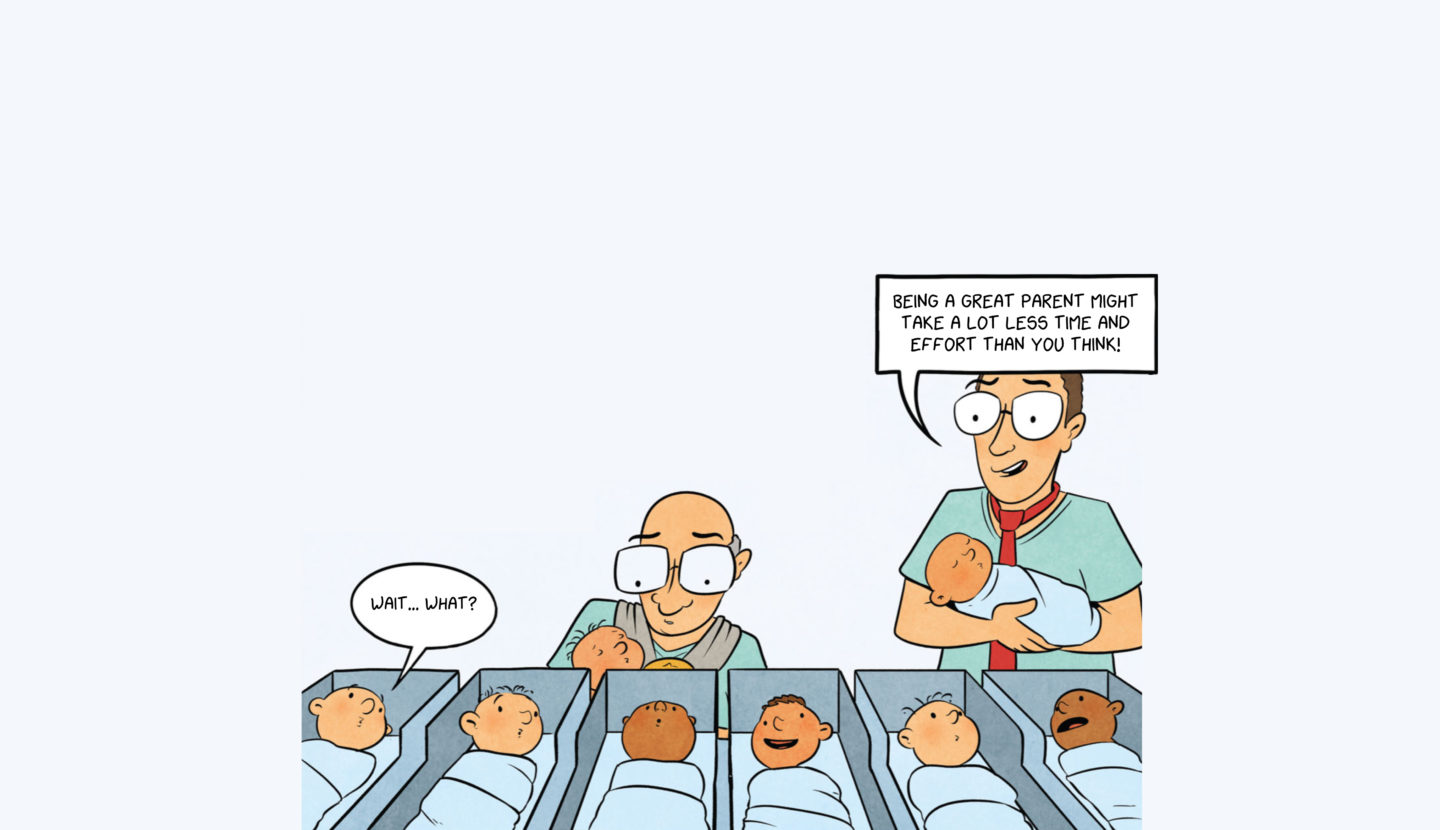
Everybody knows that good parenting has a big impact on how kids turn out. Except that maybe they don’t, because it doesn’t.
Incredible though it might seem, according to today’s guest — economist Bryan Caplan, the author of Selfish Reasons To Have More Kids, The Myth of the Rational Voter, and The Case Against Education — the best evidence we have on the question suggests that, within reason, what parents do has little impact on how their children’s lives play out once they’re adults.
Of course, kids do resemble their parents. But just as we probably can’t say it was attentive parenting that gave me my mother’s nose, perhaps we can’t say it was attentive parenting that made me succeed at school. Both the social environment we grow up in and the genes we receive from our parents influence the person we become, and looking at a typical family we can’t really distinguish the impact of one from the other.
But nature does offer us up a random experiment that can let us tell the difference: identical twins share all their genes, while fraternal twins only share half their genes. If you look at how much more similar outcomes are for identical twins than fraternal twins, you see the effect of sharing 100% of your genetic material, rather than the usual 50%. Double that amount, and you’ve got the full effect of genetic inheritance. Whatever unexplained variation remains is still up for grabs — and might be down to different experiences in the home, outside the home, or just random noise.
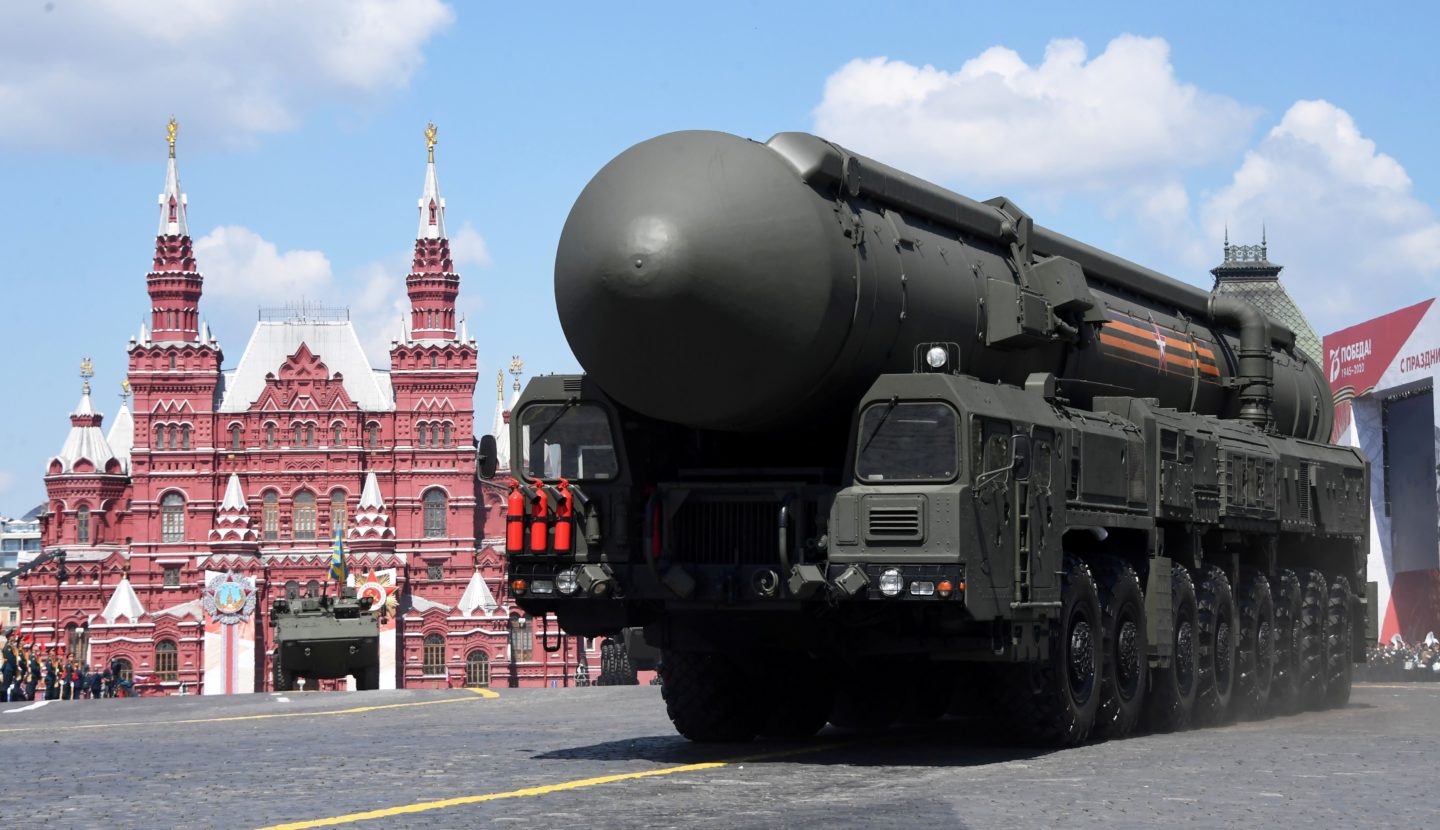
Since the Soviet Union split into different countries in 1991, the pervasive fear of catastrophe that people lived with for decades has gradually faded from memory, and nuclear warhead stockpiles have declined by 83%. Nuclear brinksmanship, proxy wars, and the game theory of mutually assured destruction (MAD) have come to feel like relics of another era.
Russia’s invasion of Ukraine has changed all that.
According to Joan Rohlfing — President of the Nuclear Threat Initiative, a Washington, DC-based nonprofit focused on reducing threats from nuclear and biological weapons — the annual risk of a ‘global catastrophic nuclear event’‘ never fell as low as people like to think, and for some time has been on its way back up.
At the same time, civil society funding for research and advocacy around nuclear risks is being cut in half over a period of years — despite the fact that at $60 million a year, it was already just a thousandth as much as the US spends maintaining its nuclear deterrent.
If new funding sources are not identified to replace donors that are withdrawing (like the MacArthur Foundation), the existing pool of talent will have to leave for greener pastures, and most of the next generation will see a career in the field as unviable.
While global poverty is on the decline and life expectancy increasing, the chance of a catastrophic nuclear event is probably trending in the wrong direction.
Joan points out that the New START treaty, which dramatically limits the number of warheads the US and Russia can deploy at one time, narrowly survived in 2021 due to the election of Joe Biden. But it will again require renewal in 2026, which may or may not happen, depending on whether the relationship between the two great powers can be repaired over the next four years.
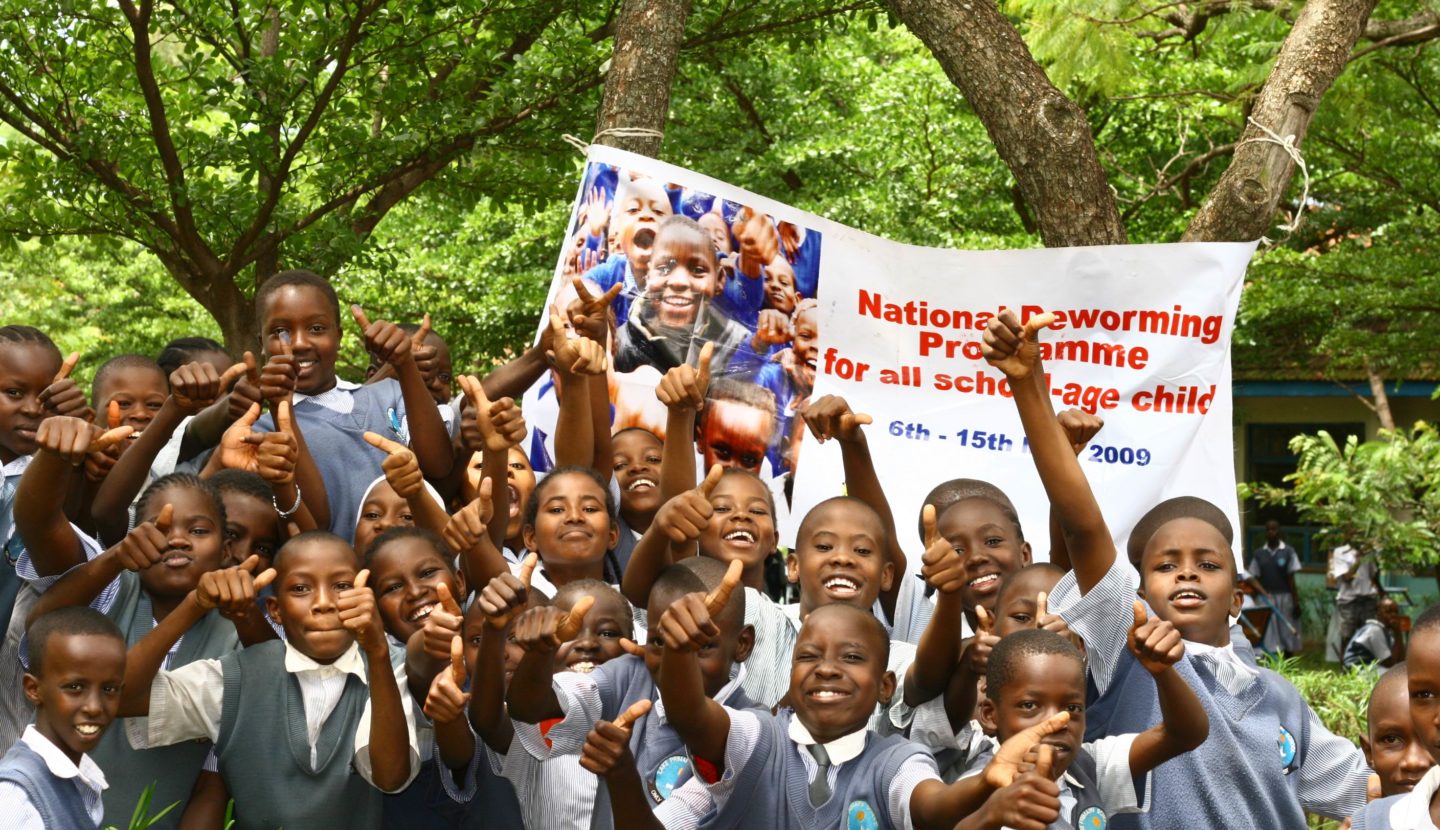
If someone said a global health and development programme was sustainable, participatory, and holistic, you’d have to guess that they were saying something positive. But according to today’s guest Karen Levy — deworming pioneer and veteran of Innovations for Poverty Action, Evidence Action, and Y Combinator — each of those three concepts has become so fashionable that they’re at risk of being seriously overrated and applied where they don’t belong.
Such concepts might even cause harm — trying to make a project embody all three is as likely to ruin it as help it flourish.
First, what do people mean by ‘sustainability’? Usually they mean something like the programme will eventually be able to continue without needing further financial support from the donor. But how is that possible? Governments, nonprofits, and aid agencies aim to provide health services, education, infrastructure, financial services, and so on — and all of these require ongoing funding to pay for materials and staff to keep them running.
I buy my groceries from a supermarket, and I’m not under the illusion that one day I’ll be able to stop paying and still get everything I need for free. And there’s nothing wrong with this way of getting life’s necessities being ‘unsustainable’ — so long as I want groceries, I’ll keep paying for them.
Given that someone needs to keep paying, Karen tells us that in practice, ‘sustainability’ is usually a euphemism for the programme at some point being passed on to someone else to fund — usually the national government. And while that can be fine, the national government of Kenya only spends $400 per person to provide each and every government service — just 2% of what the US spends on each resident. Incredibly tight budgets like that are typical of low-income countries. While the concept of ‘sustainability’ sounds great, to say “We’re going to pass the cost of this programme on to a government funded by very poor people’s taxes” sounds at best ambiguous.

Russia’s invasion of Ukraine is devastating the lives of Ukrainians, and so long as it continues there’s a risk that the conflict could escalate to include other countries or the use of nuclear weapons. It’s essential that NATO, the US, and the EU play their cards right to ideally end the violence, maintain Ukrainian sovereignty, and discourage any similar invasions in the future.
But how? To pull together the most valuable information on how to react to this crisis, we spoke with Samuel Charap — a senior political scientist at the RAND Corporation, one of the US’s foremost experts on Russia’s relationship with former Soviet states, and co-author of Everyone Loses: The Ukraine Crisis and the Ruinous Contest for Post-Soviet Eurasia.
Samuel believes that Putin views the alignment of Ukraine with NATO as an existential threat to Russia — a perhaps unreasonable view, but a sincere one nevertheless. Ukraine has been drifting further into Western Europe’s orbit and improving its defensive military capabilities, so Putin has concluded that if Russia wants to put a stop to that, there will never be a better time to act in the future.
Despite early successes holding off the Russian military, Samuel is sceptical that time is on the Ukrainian side. Though it won’t be able to create a puppet government Ukrainians view as legitimate, if committed to the task, Russia will likely gradually grind down Ukrainian resistance and take formal control of the country. If the war is to end before much of Ukraine is reduced to rubble, it will likely have to be through negotiation, rather than Russian defeat.
80,000 Hours
80,000 Hours provides research and support to help students and graduates switch into careers that effectively tackle the world’s most pressing problems.
Over one million people visit our website each year, and more than 3,000 people have told us that they’ve significantly changed their career plans due to our work. We’re also the largest single source of people getting involved in the effective altruism community, according to the most recent EA Survey.
The Internal Systems team
The Internal Systems team is here to build the organisation and systems that support 80,000 Hours to achieve its mission.
We oversee 80,000 Hours’ office, finances, and impact evaluation, as well as much of our fundraising, org-wide metrics, tech systems, HR, and recruiting.
Currently, we have two full-time staff (Brenton Mayer and Sashika Coxhead), some part-time staff, and receive support from CEA (our fiscal sponsor).
Role
This role would be excellent experience for someone who wants to build career capital in operations, especially if you could one day see yourself in a more senior operations role (e.g. taking on more management, and perhaps eventually being a Head of Operations or COO).
Your responsibilities will likely include:
In this episode of 80k After Hours, Rob continues to interview his 80,000 Hours colleagues Michelle Hutchinson and Habiba Islam about the 1-1 team.
This is the second of a two-part interview. You can find the first part on the original 80,000 Hours Podcast feed.
In this part, they cover:
Who this episode is for:
Who this episode isn’t for:

One of 80,000 Hours’ main services is our free one-on-one careers advising, which we provide to around 1,000 people a year. Today we speak to two of our advisors, who have each spoken to hundreds of people — including many regular listeners to this show — about how they might be able to do more good while also having a highly motivating career.
Before joining 80,000 Hours, Michelle Hutchinson completed a PhD in Philosophy at Oxford University and helped launch Oxford’s Global Priorities Institute, while Habiba Islam studied politics, philosophy, and economics at Oxford University and qualified as a barrister.
In this conversation, they cover many topics that recur in their advising calls, and what they’ve learned from watching advisees’ careers play out:
The episode is split into two parts: the first section on The 80,000 Hours Podcast, and the second on our new 80k After Hours. This is a shameless attempt to encourage listeners to our first show to subscribe to our second feed.

Why 80,000 Hours?
80,000 Hours’ mission is to get talented people working on the world’s most pressing problems. The effective altruism community, of which we are a part, is growing in reach and now includes funding bodies with over $40 billion to allocate in total. But how do we make sure people are pursuing the right kinds of work in order to turn all those resources into long-term impact? This is the problem 80,000 Hours is trying to solve.
We’ve had over eight million visitors to our website (with over 100,000 hours of reading time per year), and more than 3,000 people have now told us that they’ve significantly changed their career plans due to our work. 80,000 Hours is also the largest single source of people getting involved in the effective altruism community, according to the most recent EA Survey.
If you join us as a writer, you’d likely be one of the most widely read writers in effective altruism.
The role
As a writer at 80,000 Hours, your work would involve:
Some of the types of pieces you’d help work on include: