

The job market is about to change more than it has in a generation.
Based on 15+ years of research, this ridiculously in-depth guide will help you navigate it.
The job market is about to change more than it has in a generation.
Based on 15+ years of research, this ridiculously in-depth guide will help you navigate it.
The job market is about to change more than it has in a generation.
Based on 15+ years of research, this ridiculously in-depth guide will help you navigate it.

Why read this guide?
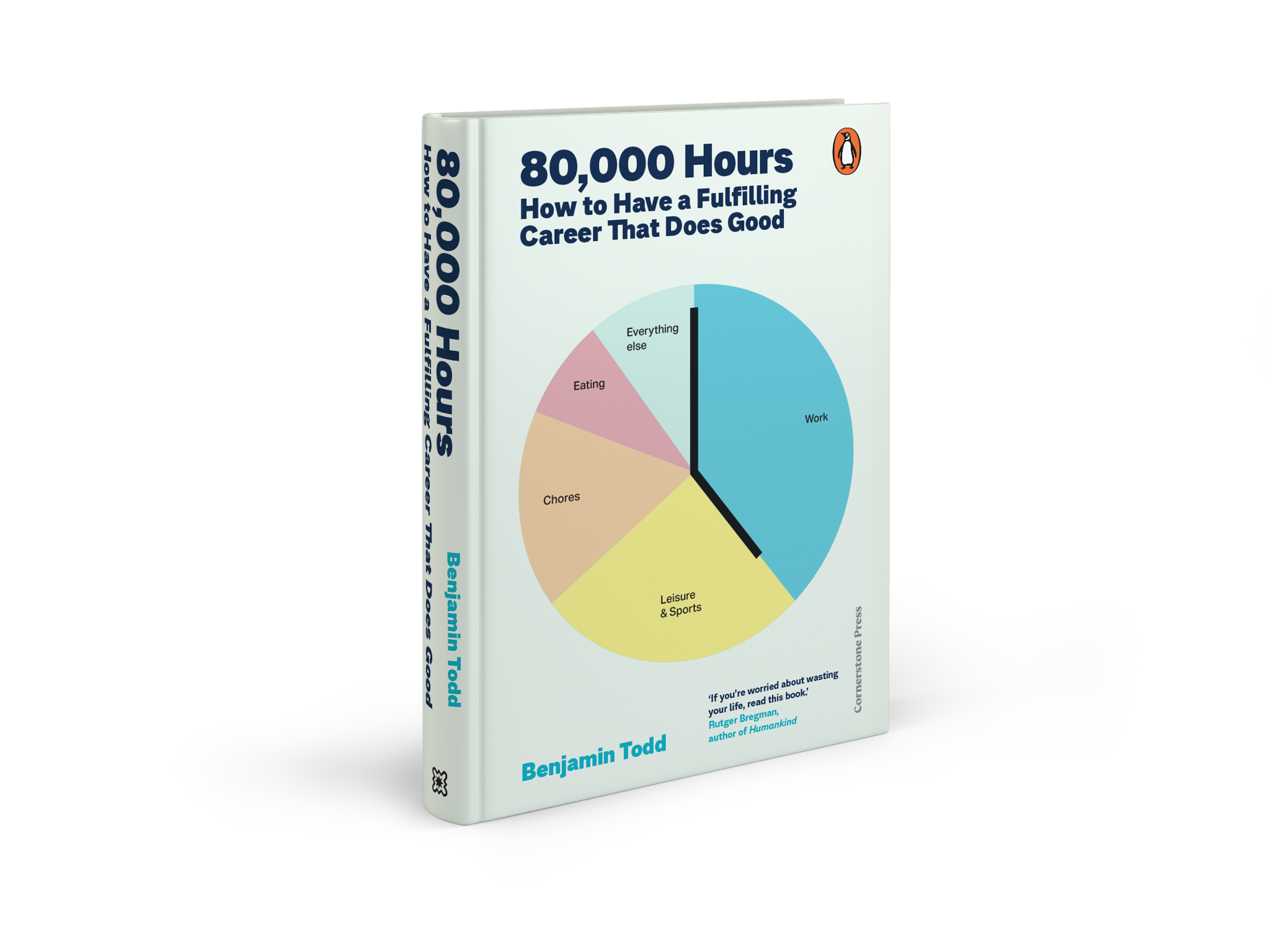
Answer: You have about 80,000 hours in your career: 40 hours a week, 50 weeks a year, for 40 years. That makes it the most important decision you’ll ever make, especially if you want to have a positive impact on the world. Spend just a couple of those hours reading this guide and you could find a career that’s both more rewarding and impactful than your current default.
Or read a one-minute summary of the entire guide.
What to aim for

What makes for a dream job?
Answer: Three decades of research have shown that to have a fulfilling career you should do work you’re good at and that helps others. Don’t look for a high-paid, easy job and don’t expect to “follow your passion” either. Instead, look for these five key ingredients of a dream job:
Rutger Bregmanauthor of Humankind
Rutger Bregmanauthor of Humankind

How to make a difference

How much difference can one person really make?
Answer: Many common ways of doing good, such as becoming a doctor, have less impact than you might first think. Meanwhile, less conventional options can save thousands or even millions of lives. What separates them? Find out why your choice of career is so important:

Can you change the world without changing jobs?
Answer: With the right approach, you can make a huge difference in the lives of others without changing careers or even making a major sacrifice. You can do this by donating effectively, doing political advocacy, or being a multiplier to help effective people do more. Learn three evidence-backed ways to have a real impact in any job:

How can you pick a world problem to focus on?
Answer: To maximise your impact, don’t focus on the issues everyone is talking about. Look for a problem that is big in scale, neglected, and has avenues for progress. Discover how to compare world problems:
Hannah Ritchieauthor of Not the End of the World
Hannah Ritchieauthor of Not the End of the World


What's the biggest and most urgent problem in the world?
Answer: People in high-income countries who want to do good often turn to things like health, education, or social issues where they live. But global poverty is a far bigger and more solvable problem, and issues like factory farming, pandemics, and risks from AI are even bigger and more neglected still. Read our framework for deciding which problems are the most urgent:
Also see our list of the world’s most pressing problems.

Which jobs help people the most?
Answer: When we think about careers that do good, we tend to think about professions like medicine, teaching, or working for a charity. But these are not always the highest-impact options. Think broadly about how you can contribute, including research, taking a high-paying job to donate effectively, communicating ideas, organisation-building, or working in government and policy:
How to build useful skills

How do people commonly sabotage their careers?
Answer: Three common career mistakes include failing to invest in yourself by building career capital, not asking how to (actually) advance most efficiently, and waiting too long to have an impact. Find out more about how to best invest in your career:

Which skills will be most valuable in the future?
Answer: The most valuable skills are those that are needed in impactful jobs, quick to learn relative to their value, transferable, and likely to increase in value due to AI. The latter means skills that are hard to automate, are needed for AI deployment, produce things people want more of, and are difficult for others to learn quickly. Explore our list of most valuable skills:

Which jobs best advance your career?
Answer: Look for jobs that progress you rapidly towards the most impactful careers while providing a good environment for rapid learning. Examples include working at smaller, high-performing, growing organisations; graduate studies in carefully chosen subjects; established routes into policy careers; crash courses in concrete, verifiable skills that employers actually value; and doing anything that might be impressive or impactful in the coming years. Learn the five categories of jobs that best advance your career:

What's the right career for you?
Answer: Don’t expect to figure out what you’re best at right away, especially through endless introspection, ‘going with your gut,’ or career tests. Instead, think like a scientist: make best guesses, list your key uncertainties, then investigate those uncertainties by doing research and cheap tests. Learn how to find a career that fits:
Cal Newportauthor of Deep Work
Cal Newportauthor of Deep Work


Should you settle in your career or keep exploring?
Answer: Here are four strategies to help you strike the right balance between exploration and execution. Aim higher than you would otherwise, especially if you have a longer time horizon. If really uncertain, plan to try several paths sequentially. Consider trying a wildcard to avoid getting stuck in a ‘local optimum.’ And if you’re in doubt about whether you’re on the right path, quit. Learn the four research-backed strategies for deciding when to commit:
Making your plan and putting it into action

What's the best way to make career decisions?
Answer: Forget lists of pros and cons. Decades of research have shown that the four most important ways to make better decisions are to (1) generate more options, (2) structure your decision by rating 3–7 relevant factors, (3) identify key uncertainties and try to resolve them, and (4) check your gut — if you feel uneasy, figure out why. Learn how to escape paralysis and make career decisions:

How should you plan your career?
Answer: Rather than trying to pinpoint the single best option for the rest of your life, accept that your plan will change. Instead of “keeping your options open,” think about your career in stages: exploring, building career capital, and deploying it to tackle world problems. Have a vision, but focus most of your effort on taking the best next step. Organise your options into a plan A and plan B, but also an acceptable plan Z in case it all goes wrong. Find out how to make a career plan:
To make your own plan, try our career planning template.

What's the best way to actually get a job?
Answer: Getting a job is a sales process with three stages: generating leads, convincing employers, and negotiating offers. Don’t just send out your CV in response to job listings. Get leads through your connections and prove you can do the work (by doing some). Treat your search like a 9–5 and use every technique you can to stay motivated. See our summary of the best advice on getting the job you want:

What's the best way to network?
Answer: Avoid networking events and joining random groups on social media. Instead, meet people you like, help them out, and build genuine relationships. Do five-minute favours, run a feed about your industry on social, or hold small mixer events. Join a community of people working in the same area as you and you’ll gain hundreds of connections at once. Learn how to network towards a more fulfilling career:

On your deathbed
What will you wish you’d done with your life, looking back? Plus a one-minute summary of the entire guide.

How can you be more successful in your current job?
Answer: A lot of self-help advice is offered without data to back it up, but there are plenty of evidence-based ways anyone can become more productive, impactful, and happy in any career. Don’t neglect the basics like your mental and physical health. Consider “meta” skills that can make you more effective at everything else, like learning how to learn, think, improve your social skills, and set goals. Discover 15 evidence-based ways to be more successful:
What’s next?

Get one-on-one advice
If you want help thinking through your options, we offer free one-on-one advising for people aiming to tackle the world’s most pressing problems.
Or our AI advisor can help you apply our advice to your personal situation. Speak with AdvisorBot.
Or keep learning beyond the basics
Here’s some more of our most important research about how to have more impact with your career:
- AI careers: Our guide to careers tackling risks from advanced AI, the problem we think is most pressing right now.
- Problem profiles: A regularly updated list of the world’s most pressing problems.
- Career reviews: In-depth reviews of individual career paths and how to enter them.
- Podcast: Expert interviews on the world’s most pressing problems.
- Foundations: The philosophy behind our advice — what impact means, why some problems matter more, and how to think about career choice.

Prefer a book?
The guide is also available as a paperback, ebook, or audiobook.