

AI safety advocacy
Review status
Based on an in-depth investigation
Table of Contents
What do professional advocates do?
Advocacy is often misunderstood. While some people think advocacy means proving an argument, in practice it’s mostly about identifying shared interests and building coalitions of support around them. Making a compelling argument is often part of this, but it has to be complemented with strategically identifying decision makers and who they listen to, building trusted relationships, developing tacit knowledge about how decisions are made, etc.
Advocacy requires knowing who makes a decision, which audiences influence them, and how to work with those people towards shared goals. One expert told us that advocates need to be “laser focused on what specific action they want specific people to take, and why, in their shoes, it would make sense for them to do so.”
While policymakers and AI companies are self-interested, they care about the views of various groups. A frontier AI company’s employees, investors, and consumers are all powerful stakeholders (as shown in the 2023 OpenAI board conflict, for example). Similarly, an elected official might be pulled in multiple directions at once by the interests of their constituents, party leadership, civil society groups, donors, political action committees, etc. The best advocates think strategically about who they are trying to reach and why.
Of course, ‘advocacy’ is a broad term that covers many types of jobs. Advocacy organisations tend to specialise based on how narrowly they define the groups that they are trying to influence, though they sometimes overlap. A professional advocate might:
- Meet directly with decision makers: speak with lawmakers and their staff, or with AI company employees, about a specific issue. In a legislative context this often involves building trusted relationships, negotiating support for specific bills or amendments, and communicating a clear position.
- Example: Encode AI‘s sponsorship of California’s bill SB-53
- Convene other stakeholders to build coalitions: meet with other civil society groups to organise support or opposition to a decision, find consensus on shared concerns, and host events to communicate positions.
- Example: the Center for AI Safety statement on AI risks
- Mobilise grassroots support: help organise people to take specific actions such as calling their elected representatives, boycotting an AI product, attending a protest, etc.
- Example: in 2025, child safety advocates, state government officials, artists, and AI safety groups mobilised opposition to defeat the proposed US federal moratorium on state AI regulations.
- Shape public perceptions: communicate in a compelling way for a general audience, helping them recognise a problem and potential solutions to it. This often overlaps with the skills described in our post on communicating ideas.
- Example: AI 2027 by the AI Futures Project
Advocacy groups also typically specialise based on whether they’re trying to shape the decisions of corporations or policymakers, though they sometimes overlap. A corporate campaign might look like The Future of Life Institute’s AI Safety Index, which scores companies’ behaviour on criteria like dangerous capability evaluations, whistleblower protections, and published safety frameworks. Political advocates tend to focus on supporting legislation, such as California’s SB-53, or on government decisions like reviewing OpenAI’s transition from a nonprofit to a for-profit. This post will cover both approaches, though we think policy advocacy is particularly important.
What could a job in advocacy look like for you? Titles and job descriptions will vary, but a few examples from different kinds of organisations could include:
- Communications advisor: the public-facing voice. Helps to translate research and policy positions into compelling messages for journalists, lawmakers, and the public, including on social media or in press releases.
- General counsel and policy advisor: the legislative text expert and in-house lawyer. Manages internal legal compliance for the nonprofit and advises on legislative substance — drafting bill text, reviewing proposed legislation, etc.
- Engagement or government affairs lead: the DC or Bay Area insider. Builds and maintains trusted relationships with senior AI company employees, or with Capitol Hill staff and agency officials, to push for sensible policies.
- Organising director: the grassroots campaign organiser. Recruits and manages volunteers, plans and executes protests or call-in campaigns, and builds the email lists and local chapters needed to turn public concern into action.
Why work on advocacy?
Policy is a process. While it often starts with foundational research about problems and potential solutions, this is just the beginning. Effective advocacy fills the gap between ideas and actions, especially when decision makers are still working to understand how an issue relates to their priorities. There has already been some effective advocacy in AI safety, and there will likely be more opportunities in the coming years as AI’s significance grows, yet this path is often neglected.1

Advocacy has already been impactful in AI safety and policy
In recent years, California and New York both passed legislation requiring frontier AI companies to publish their safety protocols, protect whistleblowers, and report catastrophic incidents to the government (SB-53 and the RAISE Act). These laws seek to increase transparency into how the largest companies developing powerful AI models make their safety decisions. While these laws were shaped by many actors, including elected officials and their staff in state governments, advocates played a crucial role. You can read more about how SB-53 was passed into law in our section below.
Beyond supporting legislation, professional advocates also help inform governments about issues. When OpenAI sought to transition from a nonprofit to a for-profit, the Attorneys General of California and Delaware both investigated. Advocacy groups like Legal Advocates for Safe Science and Technology (LASST) and Encode AI worked to brief these offices on the stakes of the decision. LASST helped organise the Not For Private Gain coalition letter, which described the safeguards that the restructuring would remove, and Encode AI filed an amicus brief warning of reduced accountability, weakened oversight, and mission drift. Eventually, as LASST’s Tyler Whitmer described on our podcast, the Attorneys General mandated several legal controls and safeguards.
While external pressure on private actors only works sometimes, we think the stakes of AI companies’ decisions deserve careful scrutiny. Google DeepMind’s CEO Demis Hassabis recently said, “The decisions we make in the next 5–10 years are going to affect us for thousands of years.” These companies don’t make decisions in a vacuum — their incentives are shaped in part by pressure from customers, investors, and employees. Watchdog research organisations like The Midas Project have revealed AI companies’ political influence tactics or safety policy walkbacks, and grassroots movements like QuitGPT have sought to disincentivise irresponsible uses of AI through consumer boycotts. Corporate AI advocacy is more nascent than legislative work, but might influence crucial decisions.
Because their talent is so rare, AI company employees have a remarkable amount of leverage. For example, in 2018, over 3,000 Google staff signed a letter that halted Google’s use of AI for military targeting (though Google recently announced full cooperation with the US government on the use of their AI models for “all lawful purposes”). Similarly, OpenAI recently faced internal pressure from employees to add stronger language against the use of their models for domestic surveillance, though experts have noted their deal also gives the government significant leeway for domestic surveillance.
This might be a high-leverage moment for AI advocacy
Lawmakers are now taking an increased interest in AI. Many elected officials and their staff are starting to form their views about how transformative the technology could be, what problems it might present, and what (if anything) they should do to mitigate them.
The politics of AI are also still malleable and diverse across the political spectrum. Recent bipartisan AI bills in the US Congress include the AI Risk Evaluation Act which would require frontier AI developers to submit new models for pre-deployment testing of severe risks, and the AI Whistleblower Protection Act which would shield AI company employees from retaliation when they report safety vulnerabilities.
Similarly, public opinion about AI is still in flux. In a Washington Post poll, 51% of surveyed voters said that they trust neither political party to handle AI issues, with only 19% saying they trust the Democratic Party and 18% the Republican Party. Similarly, recent polling by The Argument Magazine found a 39% to 33% split in positive to negative views of AI’s impact on society among US voters, with the rest of respondents unsure or neutral. We suspect that AI will continue to be a politically salient issue across the political spectrum.
Grassroots advocacy and public-facing communication about AI safety might be able to raise awareness of AI risks and channel general concerns into concrete policy outcomes. Effective advocates understand the range of concerns within a movement and can find common ground. Shaping online discourse can also influence legislative staff and frontier AI company employees, who tend to spend a lot of time on Twitter and Substack. It’s possible that attention from the public has influenced AI companies’ decisions about third-party testing, releasing ‘system cards‘ for safety, and thinking carefully about high-stakes model deployments.
Advocacy is often neglected, with some talent profiles in high demand
AI safety has historically attracted analytical thinkers who gravitate to research roles. While there are a lot of ways a researcher can be impactful in AI policy or technical safety work, the skill profile to be a great advocate can be different (as you can see below). Some people who are enthusiastic about ensuring the transition to a world with powerful AI systems goes well might not realise that they have useful skills and experience for an impactful non-research job.
We’ve heard that AI advocacy organisations sometimes struggle to find great candidates as they grow, since there isn’t an established fellowship or talent development pipeline like in research roles. There’s also a lot of low-hanging fruit in advocacy for new organisations to work on.

In fact, in a survey of AI safety leaders, advocacy was identified as the most under-resourced AI safety subfield relative to its importance — and talent is a major resource! We expect this field will grow in the coming years, needing people who are thoughtful about AI and have communication and strategy skills. If you have the right disposition and have (or can get) some relevant career experience, advocacy might be among the most impactful options for your career.
When asked about the gaps in the AI policy ecosystem, one expert told us that effective outreach is an important and commonly misunderstood step in the policymaking process:
I want people to stop viewing the 50 page research paper as the gold star. That’s really not the point. Yes, you do need to understand your policy area, and sometimes a paper can help get you in the door, but policy is fundamentally about relationships. I’d rather you meet 50 people in DC than write 50 pages.
At the end of the day, no one is going to read your 50 pages, except the few staff who might finally be ready to get into the implementation details. Where is your two-pager, your Substack post, your tweet thread, your elevator pitch?
AI might present serious risks
Lastly, the decisions that lawmakers and corporations make about AI in the coming years might be extremely consequential. If AI companies create systems that outperform humans at almost all intellectual tasks, this could create severe problems, and even existential risks, such as AI takeover, AI-enabled authoritarianism, or a deadly engineered pandemic.
When democracies face problems, advocacy is part of the process of ensuring that the public has a say. We think this will be especially important during the development of what might be the most powerful and dangerous technology in history.
Would you be a good fit?
It’s essential to have some of the skills and job experience described in this section, but you don’t need all of them. For example, some advocacy organisations prioritise direct legislative expertise and interpersonal skills, while others will favour broader public communication skills.
What skills help advocates succeed?
- Good strategic judgement about your target audience: you know which groups of people make decisions, or influence those who do, and can tailor a message to them. You’re good at predicting what audiences need to hear and how they’ll respond to it while also thinking about how you’ll be broadly perceived. You know how to read a room — when to pitch your idea or explain technical details, but also when to stay conversational.
- Knowledge of the relevant AI issues: you follow AI politics and frontier company news closely, understand key decision makers’ priorities, and can build on-the-ground relationships or process knowledge. You should also be familiar with AI safety. A technical or policy research background can bolster your credibility and knowledge, but is not typically a prerequisite.
- Pragmatism: you’re willing to make incremental progress and to work with people who might disagree with your views. You are not deterred by random setbacks.
- Resilience: you have thick skin. Advocates are often fighting an uphill battle against groups that are trying to stop them, including powerful companies or individuals. It takes a certain kind of person to handle the cynicism and adversarial nature of politics, including intimidation tactics.
- Communication and ‘translation’ skills: you can condense a complex AI safety argument into a short article, a tweet thread, or a compelling conversation. You’d be excited to turn research into legislative text or preferred AI company decisions. You’re able to motivate others in written or verbal communication.
- Charisma, social energy, and warmth: you find it easy to connect with new people and make small talk, and you feel energised by connecting with others. In Paul Graham’s words: “The key to charisma is to like people. All politicians smile when they’re working a crowd, but the really charismatic ones don’t have to remember to smile. Their smiles are genuine, because they’re enjoying themselves.”
What previous career experience is useful?
- Past political staffing or campaign experience (executive branch, Congressional, state level, etc). If you’ve ever held a legislative office, that’s an even stronger credential. Advocacy organisations often want to hire people who have sat on the other side of stakeholder meetings about a bill and have seen how legislatures work on the inside. If you have existing relationships with decision makers, that also helps.
- Credible signals of AI expertise in technical or policy work, such as being a former frontier AI company employee, think tank researcher, having worked on AI in the government or military, etc. Yoshua Bengio and Daniel Kokotajlo are both examples of established AI experts who use their voices to advocate for AI safety alongside their research.
- However, some advocates told us that potential candidates occasionally overestimate how much deep subject matter expertise is required.
- Experience in communications, writing, or journalism can all help with advocacy. This is especially true in the more grassroots or public-facing side of advocacy that targets a wider audience than lawmakers and their staff. One expert advised that the AI advocacy field still urgently needs people who understand how to garner media coverage, get peoples’ attention online, and craft messages that break through the noise. If you already have an audience (or connections to those who do), that can help as well.
- Corporate government affairs, public relations, law, or lobbying experience can also all be valuable for developing first-hand experience of how key decision makers within AI companies or legislatures might be thinking. These roles usually build the strategic and communication skills described throughout this post.
- And of course, past advocacy experience itself is often transferable, even if it wasn’t AI specific. Running a corporate or political campaign in consumer protection, data privacy, animal welfare, etc. can teach similar skills and help build tacit knowledge about advocacy strategy.
Downsides of working in advocacy
Uncertainty of impact
While researching this piece, we heard from several experts that factors outside of your control can sometimes derail progress on a piece of legislation, a partnership with another organisation, or efforts to raise awareness before a news cycle moves on. This can be frustrating — pushback from industry, poor timing, or other random contingencies can all block progress. There are sometimes a dozen opportunities to kill a bill on its way to becoming law.
And even when a favourable outcome is achieved, it’s often hard to know for sure that you were the reason why it happened. There might be several interest groups working on an issue at the same time, all claiming partial credit. For work that shapes the public’s views on AI this is even more true, since many other voices cover AI issues. It’s hard to establish clear feedback loops to know that you’re influencing the right people or that they’re taking action.
Great advocates understand Max Weber’s warning that “politics is the strong and slow boring of hard boards” which requires steadfastness in the face of diminished hopes. We think the problems humanity faces from AI are so pressing that it’s worth many attempts to influence decisions, but advocates should be willing to face the possibility of never achieving their goals, or of only making incremental progress towards them.
Bad advocacy can harm its own cause
In our article about how to avoid accidentally making a problem worse, we wrote that it’s important to consider the reputational harm your actions might cause to others pursuing similar goals. We think this is an especially important risk to avoid for advocacy work, since advocates usually need to build broad coalitions of support.
Raising attention for an issue is almost always part of advocacy, but not all attention is helpful. For example, lawmakers and their staff have limited time, so even one poorly run advocacy meeting might limit other groups’ access or credibility. It’s possible to communicate the deadly stakes of AI risks while still being thoughtful about which messages will resonate with your target audiences. Advocacy that is overly focused on intramovement divisions can also waste energy and alienate potential allies.
While we think it’s important for all advocates to be thoughtful, we recognise that excessive caution can have its own costs, such as downplaying the seriousness of an issue or missing opportunities. Professional advocates use a range of tactics — some work to pragmatically find win-win solutions within existing political realities, while others seek to shift public opinion through bold messaging and public engagement. Most movements balance these ‘insider’ strategies (influencing policy from within established institutions) and ‘outsider’ strategies (shifting the political environment), including AI safety.
Still, some tactics are clearly harmful. Breaking the law or committing violence in service of AI advocacy is immoral and ineffective. We think it’s a mistake to try to justify harmful actions with a hypothetical greater good, especially unilateral actions. Even the writers who are most concerned that superintelligent AI would be an extremely dangerous technology, such as Eliezer Yudkowsky and Zvi Mowshowitz, have written that lawful means are the only way to prevent it.
AI advocacy is growing, but it’s still a small field
While many AI safety advocacy organisations are being founded or are growing their teams now, it is still a niche field, so the job market is still relatively small. We think that these roles are impactful enough to warrant serious attention, and we expect there to be more of them in the coming years, but you should be aware that it might be hard to find a full time job without relevant skills and experience.
If you don’t have these already, you could consider taking a year to build career capital in roles like legislative staffing, lobbying, public or government relations, communications, or non-AI advocacy. Strong technical AI credentials can also bolster your credibility to be an effective advocate. You should also be aware that it’s typically easier to go from government into advocacy than vice-versa, so building experience first can also preserve optionality.
Advocacy in practice: California’s SB-53
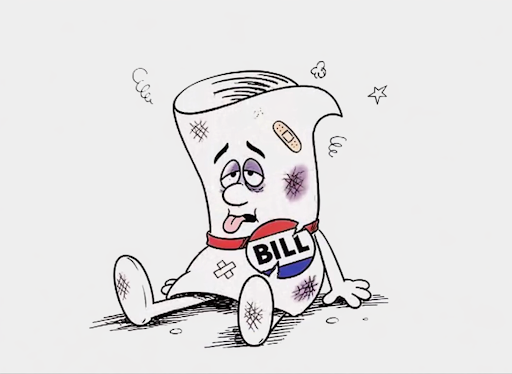
California was the first state to pass a law aimed at making the development of AI systems safer, but the process faced almost two years of hurdles, shifting political support, and opposition from industry. As POLITICO reported from firsthand sources, the September 2025 Transparency in Frontier Artificial Intelligence Act (SB-53) was shaped by intense negotiations between the AI industry, the Governor’s office, cosponsoring advocacy organisations, and state Senator Scott Wiener (the bill’s author).
SB-53 was Senator Wiener’s second attempt at AI legislation. He introduced his first bill (SB-1047) in February of 2024, but it was vetoed by the Governor’s office seven months later. The first bill was more ambitious, requiring pre-release safety testing and assigning liability for certain harms. Advocacy groups including Encode AI and the Secure AI Project helped carry it through the legislature over fierce industry opposition, but Governor Newsom did not support it. Instead, he created a panel to recommend an alternative approach to AI regulation. The panel suggested transparency and whistleblower protections, which gave Senator Wiener a template and the political credibility for his next bill. Much of the coalition and policy groundwork built during the SB-1047 fight carried directly into SB-53 and made its fast passage possible.
Senator Wiener’s office and co-sponsoring advocacy groups got to work on SB-53 almost immediately after SB-1047’s veto, locking in a placeholder measure only three months later in January 2025. Industry pushback was again intense and sustained, with major developers jockeying over definitions and scope to the final hours. Wiener’s team made strategic concessions — covering only the largest AI companies and removing the third-party auditing requirement — to keep the bill moving. The Governor’s office largely stayed out until August, then stepped in to broker the final terms before the legislative deadline. This time, the Governor perceived that the bill “struck the right balance,” and signed it into law.
We think this example showcases several themes from this career review: the importance of having a resilient and pragmatic approach to policy, developing good mental models of what the decision makers you hope to influence are willing to agree to, and how windows of policy opportunity can open and close quickly.
Top organisations
These organisations do not all share the same policy positions, tactics, or target audiences. However, they all push for policy changes aimed at reducing risks from advanced AI, and we think they’re all worth reviewing if you’re interested in advocacy to shape AI’s trajectory:
- AI Policy Network: an organisation focused on federal advocacy for policies preparing the US for AGI and frontier AI. It engages Congress and the executive branch on national security, chip security, loss-of-control risks, and AGI preparedness.
- Americans for Responsible Innovation: an organisation that advocates for a federal AI governance framework spanning consumer protection (especially for minors), national security and export controls, and frontier risks; endorses legislation; and works to prevent preemption of state AI laws.
- Center for AI Safety Action Fund: the advocacy arm of the Center for AI Safety with work centered on national security and US leadership on AI safety, with a current emphasis on chip security.
- Encode AI: a youth-led organisation which runs federal and state-level advocacy to ensure AI works for all, and which helped pass the TAKE IT DOWN Act and California’s SB 53.
- Future of Life Institute: an organization focused on extreme risks from transformative technologies which produces the AI Safety Index (to score AI company safety practices) and works on US, EU, and UN AI policy.
- Secure AI Project: a policy-development and advocacy group focused on passing state-level AI safety legislation, which co-sponsored California’s SB 53 and played a leading role on New York’s RAISE Act.
- Legal Advocates for Safe Science and Technology: an impact-litigation nonprofit dedicated to AI safety, which runs an amicus program, an AI safety whistleblower legal defence fund, and the Not For Private Gain coalition challenging OpenAI’s restructuring.
As mentioned earlier in this article, there are many types of advocacy. Organisations might focus on direct engagement with lawmakers or grassroots public mobilisation; they might try to influence political or corporate actors; they often have different views on how severe the risks AI presents could be; and they may take different approaches to working within the Overton window vs pushing it further.2 You should think about your own answers to these questions as you continue to read and think about advocacy to shape AI’s trajectory, then tailor your job applications to organisations that match your priorities.
How to get started
If you have some of the skills and experience listed above, and you understand AI safety issues, you should consider applying for AI advocacy roles when they open on our job board. Job titles within advocacy can vary, but might include communications manager, policy advisor or analyst, engagement lead, government affairs, etc. You can also set alerts on the job board for specific organisations that you’re interested in. Beyond advocacy itself, we think the most valuable career capital for advocacy is experience as a staffer in the executive branch, Congress, or state elected officials’ offices, followed by PR or communications roles.
Our job board features opportunities in advocacy:
If you’re not ready to directly apply for AI safety advocacy roles yet, there are many ways you can build career capital and test your fit first. To build more experience, you could aim to work in other roles in AI governance and policy, election campaigns, communications, or technical AI safety research. Even if you aren’t working directly on AI, you can gain valuable experience by working as a legislative staffer, journalist, public relations expert, or corporate affairs professional for a year first.
Working on advocacy on issues other than AI can also help you build expertise. For example, animal advocacy careers often involve grassroots corporate and legislative campaigning (and are directly impactful). You could also gain technology advocacy experience at a consumer protection advocacy group like Public Interest Research Group or a digital rights organisation like the Electronic Frontier Foundation. And broader civil society groups that don’t focus on AI yet might do so in the future as AI progress touches more of society, so you might be well positioned to shape AI policy from outside ‘AI’ organisations.
There are also ways to start contributing to advocacy without leaving your day job. You can build skills by volunteering part-time with a grassroots advocacy organisation or an election campaign. Volunteers might phonebank, knock on doors, or provide operational support. AI safety advocacy is still growing as a field, with a few new organisations just getting off the ground, so there might be more opportunities for volunteers in the near future.
Whichever path you take, it will be important for you to build up your AI safety knowledge. BlueDot Impact courses and our essential reading list can help you quickly learn about the field. You can follow AI news through Zvi Mowshowitz’s newsletter Don’t Worry About the Vase and Transformer News. Some other notable newsletters include: former White House AI Policy Advisor Dean Ball’s Hyperdimensional, Anthropic cofounder Jack Clark’s ImportAI, and forecaster Peter Wildeford’s The Power Law. Twitter can also be a good source for timely AI policy updates, such as posts by Charlie Bullock and Nathan Calvin.
Networking is also a crucial step for breaking into advocacy careers. This is partly because meeting people lets you practice the interpersonal skills that are needed for most roles, but it’s also a great way to directly learn about the field and get noticed by people working in it. We advise people to build their networks in all career paths, but it’s especially important for advocacy, as policy runs on trusted relationships. In addition, insider knowledge is valuable, since the way legislatures or corporations make decisions is often closely held tacit knowledge. There’s often a difference between how a process seems to work from the outside and how it does in reality.
To start building relationships and knowledge, you could visit a hub like Washington, DC; London; the San Francisco Bay Area; or a state capital for a few days to attend events thrown by organisations you’re interested in. Local effective altruism or AI safety groups sometimes have Slacks or group chats for sharing events. It can take time to join the relevant email lists and follow event trackers, but we recommend attending panel discussions, workshops, organisation happy hours, etc. It’s also common to reach out requesting one-on-one coffee chats ahead of a visit to a hub city. You could also consider attending conferences like EA Global, IASEAI, or The Curve. 80,000 Hours advisors can sometimes help jump-start your networking by making relevant introductions as well.
Speak with us
If you think one of these paths might be a promising option for you, but you need help deciding or thinking through your plans, our team might be able to help.
We also heard from experts that you can showcase your skills by developing a track record of garnering attention for AI safety issues, including having a thoughtful Twitter presence, writing about AI issues on Substack, or getting media outlets to cover AI safety (even small ones).
If you’re interested in legislative advocacy, you should curate an online persona that showcases your detailed knowledge of current events in AI and maintains a professional tone — just be aware that your social media will be scrutinised if you’ll be applying for roles in government or Congress. If you’re more drawn to grassroots public-facing work on AI politics or holding companies accountable, you should aim to reach a wider audience and bring attention to AI risk directly. In both cases, you should closely read AI news to develop a better understanding of the groups you’re trying to influence.
Further reading
- Many AI policy careers won’t matter. Here’s how to find one that will.
- Podcast: Sneha Revanur on how a small team of activists helped pass America’s landmark AI safety laws
- Podcast: Jasmine Sun on what the people building AI really believe
- Podcast: OpenAI: The nonprofit refuses to die (with Tyler Whitmer)
- Podcast: Nathan Calvin on California’s AI bill SB 1047 and its potential to shape US AI policy
- Will AI safety become a mass movement? by Alys Key
- How California struck a landmark law to rein in rogue AI by Chase DiFeliciantonio
- Bernie Sanders has a plan to stop the AI industry by Kai Williams
- AI safety movement report: mapping civil society response to AI risks
- AI regulation’s champions can seize common ground — or be swept aside by Zachary Arnold and Helen Toner
- How AI swallowed tech lobbying in 2026 by Ashley Gold
- Networking in policy by emergingtechpolicy.org
- FAQs and general advice on AI policy careers by Miles Brundage
Acknowledgements
We thank the many experts who advised on this career review and preferred to share their feedback anonymously.
Read next: Learn about other high-impact careers

Want to consider more paths? See our list of the highest-impact career paths according to our research.
Notes and references
- It’s beyond the scope of this article (or even 80,000 Hours as a whole!) to suggest exactly which policies governments or frontier labs should adopt regarding AI safety. While we think powerful AI systems could be dangerously misaligned, misused to create an engineered pandemic, concentrate power, etc., we recognise that experts disagree about which policy solutions are best suited to address potential risks, and that well-intentioned policy can backfire.↩
The Overton window is the range of subjects and arguments politically acceptable to the mainstream population at a given time. It is also known as the window of discourse. The key to the concept is that the window changes over time; it can shift, shrink, or expand.
Wikipedia, The Overton Window