

Introduction: Why read this guide?
Table of Contents
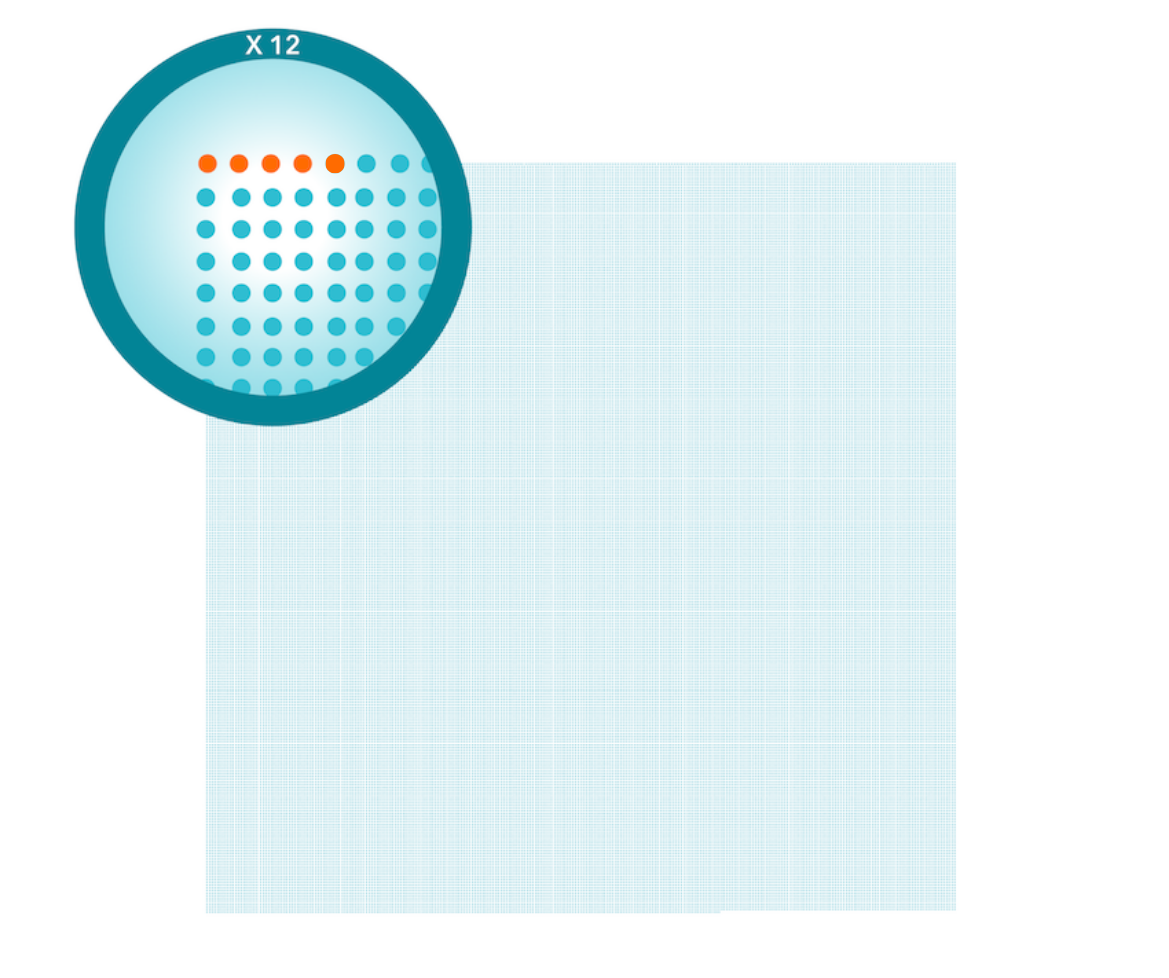
You have about 80,000 hours in your career: 40 hours a week, 50 weeks a year, for 40 years. This means your choice of career is the most important decision you’ll ever make.
It accounts for roughly one third of your waking life as an adult — more time than you’ll spend eating, socialising, and watching Netflix put together.1 It’s long enough to walk around Earth 10 times.
Choose well, and you can have a more rewarding, interesting life, and also help solve some of the world’s most pressing problems. Choose poorly, and you could waste decades.
So what should you do?
At 21, I didn’t know what to do with my life. I knew I wanted to find something that I’d enjoy, that would pay the bills, and would make a worthwhile contribution to society — but what?
Like millions of others, I’d heard the advice to “follow your passion.” But it felt shallow. I was passionate about philosophy and martial arts. So maybe I should have become a warrior monk? But I’m glad I didn’t.

I’d been a nerdy kid, obsessed with investing to the point that my parents had let me manage their pension. At university, I entered a stock-picking competition and landed a job in investment management. This would certainly have paid the bills as an investment analyst, but I was worried it would feel meaningless and so in the end be unfulfilling.
I studied physics and philosophy at Oxford, and after a summer research project in climate physics, I considered following my father into academia. But I wasn’t sure about facing years of low-paid postdocs, fierce competition, and no guarantee of making useful discoveries.
I wasn’t even sure how to go about making the decision. I searched around and spoke to careers advisors, but nowhere had the information I needed. Most career advice didn’t seem to be based on any research. And the advice I could find was about how to land different jobs rather than which were worth pursuing in the first place.
Many friends, not knowing what else to do, ended up in law or consulting. These were supposed to be the safe, prestigious paths. But many ended up putting in 70-hour weeks on work that felt pointless.
When it came to making a difference, the default options were things like medicine, social work, teaching, or (most thrillingly) working in corporate social responsibility, none of which seemed like a great fit for me anyway.
Then I started to realise the decision mattered even more than I’d thought. In my second year at university, sitting, sandwich in hand, on the floor at a lunchtime seminar, the Oxford ethicist Toby Ord walked us through the results of hundreds of studies comparing the cost of saving lives in different countries.
The numbers were staggering. It turned out that even the most expensive treatments in low-income countries were cheaper than many everyday interventions in places like the UK. But even more importantly, the cheapest and most effective interventions, like childhood vaccinations, could save lives hundreds of times more cheaply again.2
No one had ever told me about these differences, and later it became obvious why. When you poll people about how much more effective they think the best charities are at saving lives compared to the average, they guess they’re about 50% better. A noticeable difference, but not huge. Poll experts in global health, however, and they’ll say the best are around 100 times more cost effective, a difference of 10,000%. In other words, there are huge differences in the impact of different ways of helping people, but no one knows about them.
This had enormous implications for my career. It suggested that 10 years spent working at one of the most effective organisations in an area could achieve what would have taken 1,000 years working at a typical one. I could spend the remaining 30 years of my career meditating on the beach and still have done far more good for the world.
But this data raised even more questions. What if, instead of working at one of these organisations, I went into finance and donated to them instead? If I could give twice what my salary would have been, they could hire two people, maybe doubling my impact.
Then I remembered a job fair I’d attended as a teenager where I’d spoken to a couple of civil servants about working in government. If the UK’s aid budget is over £10 billion a year,3 perhaps helping to get it spent a little more efficiently could do even more good again?
Through Toby I met Will MacAskill, then a PhD student in philosophy. He was asking the same questions, so we started researching them together. In 2011, we presented some of our ideas in a lecture. To our surprise, five of the 30 or so people in the audience decided to totally change what they were planning to do with their lives. Several of them asked us to start an organisation exploring these issues. So we founded 80,000 Hours.
The name was chosen to represent the length of a typical career. If you could use those hours just 1% better, it would be worth spending up to 800 hours figuring out how to do that — 20 weeks of full-time work. (Fortunately, this guide will be a lot shorter.)
Our aim was to create the advice we wish we’d had: in-depth, clearly explained, and based on the best research available rather than our own (highly limited) life experience. Since you can find a study to ‘prove’ almost anything, we tried to focus on meta-analyses and expert consensus in the most relevant fields.4
We raised donations so we could provide everything for free, initially working in a basement at the back of an estate agent’s. After graduating, I started working at the organisation full time. Instead of choosing a career, my career would become researching which careers to choose.
We wanted to tackle not only the question of which careers were most impactful but also what research had to say about classic career questions like how to find your fit, how to compare your options, and which skills are most valuable. The hope was to create a complete, research-backed guide to finding a fulfilling career that does good.
Within months, we were invited to speak on the BBC and the website started to grow. In 2015, we were one of the first nonprofits to go through Y Combinator, the world’s leading startup accelerator. As more people changed their careers, we were able to raise more donations and grow further. Today, we have over 50 staff providing online research, a podcast with expert interviews, a job board, and free one-on-one consultations.
To date, over 10 million people have read our advice and over 3,000 of them have told us they’ve changed their career path as a result. In the coming sections, we’ll meet some of them, including Elena, who, at age 21, ended up at the White House getting tens of millions invested in masks for the next pandemic; Neel, who helped start a new field of research dedicated to understanding how AI systems work on the inside; and Tom, founder of the world’s first charity focused on fish welfare in India and China. (I’ll explain.)
While it was research in global health that convinced us careers differ in impact more than people think, we eventually wondered if there might be even bigger and more urgent issues out there. Over the years, we’ve looked at dozens of pressing problems, from climate change to mental health to even risks from nanotechnology. We found some problems had stakes hundreds of times larger than others but received hundreds of times less attention. This suggested that your choice of which problem to focus on could matter even more than how exactly you try to tackle it — but no one had ever encouraged us to think hard about this question.
By 2015, we’d started to wonder if the most crucial issues of our time might involve AI. In 2016, an AI model created by DeepMind beat one of the world’s top players at Go, a Chinese board game known for needing strategic intuition. Driven by a new approach to AI called ‘deep learning,’ the victory came sooner than many expected, and progress showed no signs of slowing. Today, when I speak to people about their careers, one of the most common questions is ‘will I lose my job to AI?’ And while it may be hard to get a great answer from your school’s guidance counsellor, there’s plenty of evidence from economic history to provide clues about how automation might affect your employment prospects.
But more crucially, if the current rate of progress in AI continues, we’re on course to eventually create systems that are smarter and more generally capable than humans at most economically relevant tasks. This could usher in a new age of abundance, or pose risks much worse than mass unemployment. Despite the hype around AI, however, many of these risks remain extremely neglected. Some have even joked that we should rename the organisation ‘20,000 hours’ because the next 10 years could be so consequential.
What’s coming up
This guide represents the culmination of everything we’ve learned to date about finding a meaningful career. It begins by considering what to aim for in your dream career and then works back to the practical question of how to get your next job:
- In Section I, we’ll cover what makes for a fulfilling career. We’ll argue that
“follow your passion” gets things backwards. Instead of starting from your preexisting interests, research suggests satisfaction comes from mastering valuable skills and using them to do engaging, meaningful work. In short, get good at something that helps others, and passion will follow. In Section II, we’ll explore how best to help others and have a positive impact. We’ll argue that careers like becoming a doctor, teacher, or social worker are probably not the most impactful options open to you. In fact, we’ll explain how, even without changing jobs, you can probably save more lives than most doctors. We’ll describe what led us to recommend working on pandemics years before COVID-19, and why today we’re mostly focused on AI, but not on the risks that get the most airtime. We’ll also explain why more indirect approaches to tackling these problems, like spreading ideas, government work, building organisations, or donating, can often let you contribute on a bigger scale while giving you a wider range of career options.
In Section III, we’ll cover how to get good at something useful, including how to build valuable skills and find the right career for you. We’ll discuss how to avoid wasting years of your career, which skills will be most valuable given AI automation, and also when to trust your gut (and when not to).
In Section IV, we’ll help you tie everything together into a career plan you can feel confident in, and explain how to put it into action. We’ll share why pro and con lists aren’t a good way to compare different paths, why you shouldn’t “keep your options open,” and why the techniques people most often use to get jobs are the least effective.
We’ve tried to make this the most rigorous, thoroughly researched guide to choosing a career ever written. While it was initially written for recent graduates with the privilege to be able to focus on their impact, the content has been revised and expanded for people looking to make a mid-career switch and to include more practical advice in the second half. Moreover, the core principles apply to anyone who wants to find a career that’s more fulfilling and impactful.
How to use the guide
Before we begin, here are a few practical notes on how to use the guide:
First, while we hope this guide will save you the many years it took us to write, it’s not the last word. We’ve been wrong before and will be wrong again. Think critically about what makes sense to you.
Second, many questions in career strategy are a matter of balance. For example, while some people need to focus more on building skills, others should stop waiting and try to do something impactful right away. That means those people need to hear opposite messages. We’ll point out the most common mistakes but also try to give you the tools to strike these balances for yourself.
Third, making a big career change takes time, as does tackling big global problems. Aim to take steps in the right direction rather than figure it all out right away. Our team may be able to introduce you to mentors who can help you along your journey.
Fourth, each part ends with some optional exercises to help apply the advice to your own career. If you work through them all, then you’ll have an updated career plan at the end, as well as a clear set of next steps into your new career path.
Finally, if you find our advice helpful, consider telling a friend about us. We’ll mail anyone who signs up to our newsletter a free copy of one of our recommended books (while we can). Just send them this link: 80000hours.org/newsletter/.
A key theme is that your career decisions matter even more than they first seem. Unless you happen to be the heir to a large estate, your career is the single biggest resource you have to contribute to the world. How you choose to use it, therefore, matters vastly more than how many plastic bags you use, how outraged you are about the latest political scandal, or even how much CO2 you personally emit.
But even more importantly, if some of the careers open to you have hundreds of times more impact than others, then with relatively little research and effort compared to the stakes, it will be possible to find a path that’s both more fulfilling, and that does far more good for the world than what you would have done otherwise. It won’t necessarily be easy, but it will be worth it.
Today, ordinary people have access to tools and wealth beyond what even kings and queens could have dreamed of in the past. Our generation has technology that could wreck the climate for thousands of years, trigger a nuclear war, or maybe soon create autonomous AI that’s smarter than us. And yet, if we can survive these challenges and put these resources to good use, we could also end extreme poverty, cure all known diseases, restore the environment, explore space, and eventually understand the universe’s deepest questions.
Our commonsense understanding of how to choose a career hasn’t yet caught up with the power in our hands. That’s what this guide is for. There are jobs out there in which you can help change the course of history on these vital issues, letting you have an extraordinary impact, while also living a thriving and fulfilling life. Our aim is to help you find them.
So, what will you do with your 80,000 hours?
Have a greater positive impact with your career
Join our newsletter to receive a free copy of our new career guide, weekly high-impact job opportunities, and updates on our research.
We’ll never share your email, and you can unsubscribe in one click.
Notes and references
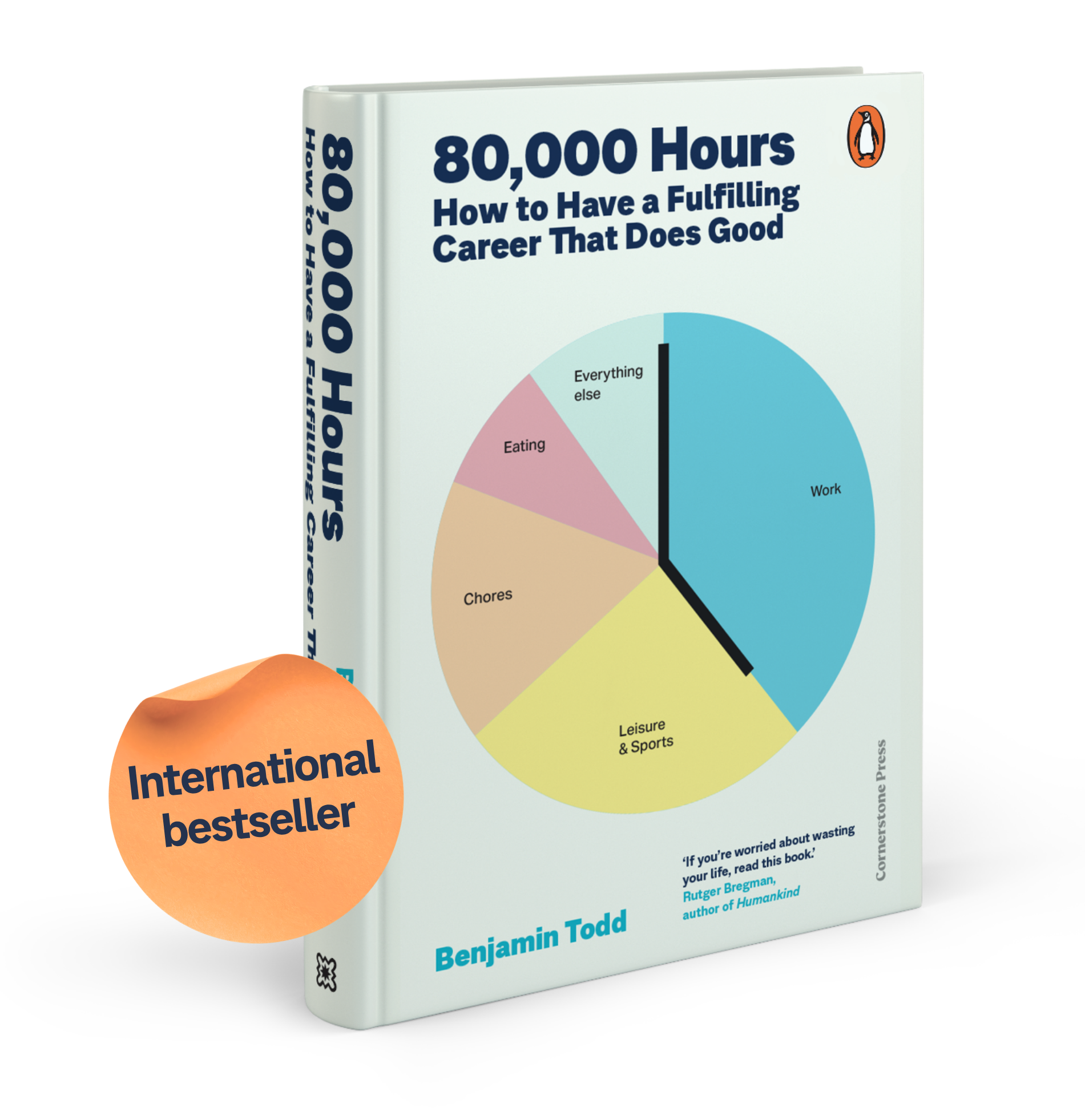
- The pie chart used on the cover of the print edition of this guide is based on data from the 2024 American Time Use Survey.
It finds that an employed adult will spend about 42h at work per week (averaged over a year), about 40% of their waking hours. The proportion is lower for part-time workers or those who take a long break from work.
- In the UK, the National Institute for Health and Care Excellence (NICE) “considers medicines costing between £20,000 and £30,000 per additional QALY [a quality-adjusted life year, equivalent to one year in perfect health] gained to represent good value for money for the NHS.”
By contrast, among 108 health interventions evaluated in developing countries by the Disease Control Priorities Project (DCP2), only five cost more than £20,000 per DALY — a disability-adjusted life year, a roughly comparable measure of a year of healthy life. The most cost-effective interventions delivered an extra year of health for about £10–£20 in today’s prices — roughly a thousand times cheaper than the threshold NICE uses to judge an intervention as cost effective in the UK.
Bouvy, Jacoline. “Should NICE’s Cost-Effectiveness Thresholds Change?” NICE News & Blogs, 13 Dec. 2024. nice.org.uk/news/blogs/should-nice-s-cost-effectiveness-thresholds-change-.
Jamison, Dean T., et al. Disease Control Priorities in Developing Countries. 2nd ed., Oxford University Press, 2006.↩
- In 2024, the UK spent about $14 billion on aid to developing countries, known as Official Development Assistance (ODA).
Foreign, Commonwealth & Development Office. Statistics on International Development: Final UK ODA Spend 2024. UK Government, 18 Sept. 2025. assets.publishing.service.gov.uk/media/68cae5911eabc899da7084f2/Statistics_on_International_Development_final_UK_ODA_spend_2024.pdf.↩
- A meta-analysis aims to review all the available research relevant to a single question, and to come to an answer while taking account of potential bias in the literature.↩