

What to aim for: Part 1 We reviewed over 60 studies about what makes for a dream job. Here’s what we found.

Table of Contents
We all want to find a dream job that’s enjoyable and meaningful, but what does that actually mean?
Some people imagine that the answer will come to them in a flash of insight, while others think what matters is that their dream job is easy and well paid.
At 80,000 Hours, we’ve reviewed three decades of research into what makes for a satisfying career, drawing on hundreds of studies, and didn’t find much evidence for either conclusion. Instead, we found five key ingredients of a dream job.
They don’t include income, nor are they as simple as “following your passion.” What’s crucial is to get good at something that helps other people.
Let’s start with where we go wrong.
Reading time: 15 minutes
The bottom line:
What makes for a dream job?
Decades of psychology research suggests there are five key things to look for in a dream job:
- Work that’s engaging hour-to-hour
- Work that helps others
- Work you’re good at
- Work done alongside supportive colleagues
- A lack of major negatives, such as unfair pay, a long commute, or major conflict with your personal life
Don’t follow your passion
For most of history, people tended to do the same things as their parents. Then the focus moved towards getting a stable job that would let you buy a house and a car. But my generation grew up with different advice: if you want a fulfilling career, follow your passion. From around 2005, this became a defining focus of career advice.
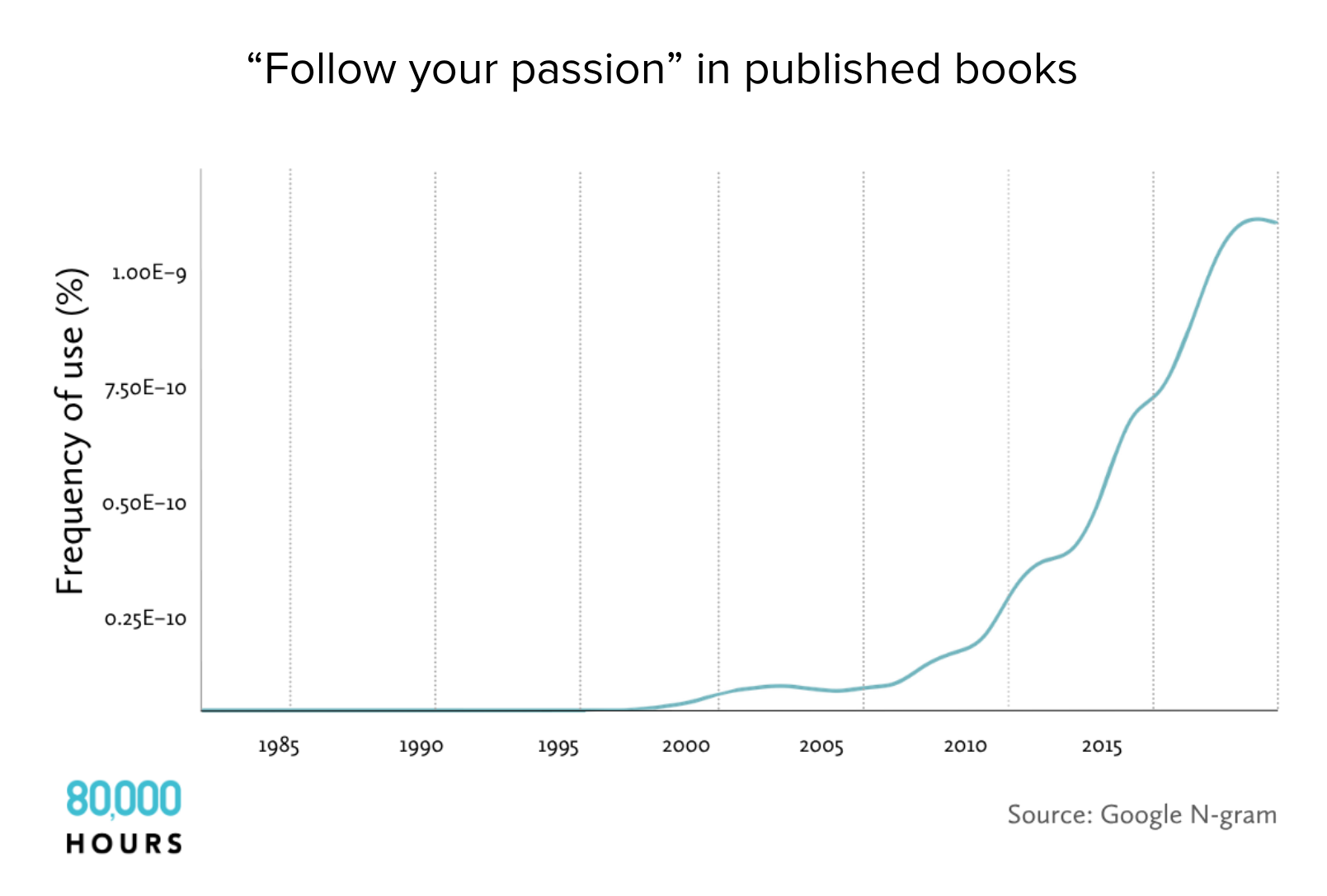
The subtext is that finding a great career depends on identifying your greatest interest — “your passion” — and pursuing it full time. It’s an attractive message: just commit to what you most enjoy and you’ll have a fulfilling career. And when we look at successful people, they are often passionate about what they do.
We’re also fans of being passionate about your work. As we’ll discuss shortly, intrinsically motivating work makes people a lot happier than a fat pay cheque. However, there are three main ways that “follow your passion” can be misleading advice.
The first is that many people don’t feel like they have a passion that could be relevant to their career. Telling them to “follow their passion” at best doesn’t get them anywhere, and at worst, makes them feel inadequate and demotivated.
Second, this advice suggests that passion is all you need. But if a basketball fan works with awful colleagues, receives unfair pay, or finds the work meaningless, they’re still going to dislike their job, even if they work for the NBA.
Likewise, someone who’s passionate about acting but ends up 40 and unemployed might have some regrets. In fact, “following your passion” can make it harder to secure the ingredients we’ll argue are most crucial for being satisfied with your job, because the areas you’re passionate about are likely to be the most competitive ones.

A survey of 500 Canadian students showed that their top passions were dance and ice hockey. Almost 90% said their greatest passion involved either music, art, or sport. But census data collected around the same time shows that under 3% of Canadian jobs were in sport or the arts. So, even if only one in 10 of those students followed their passion, the majority would fail.1
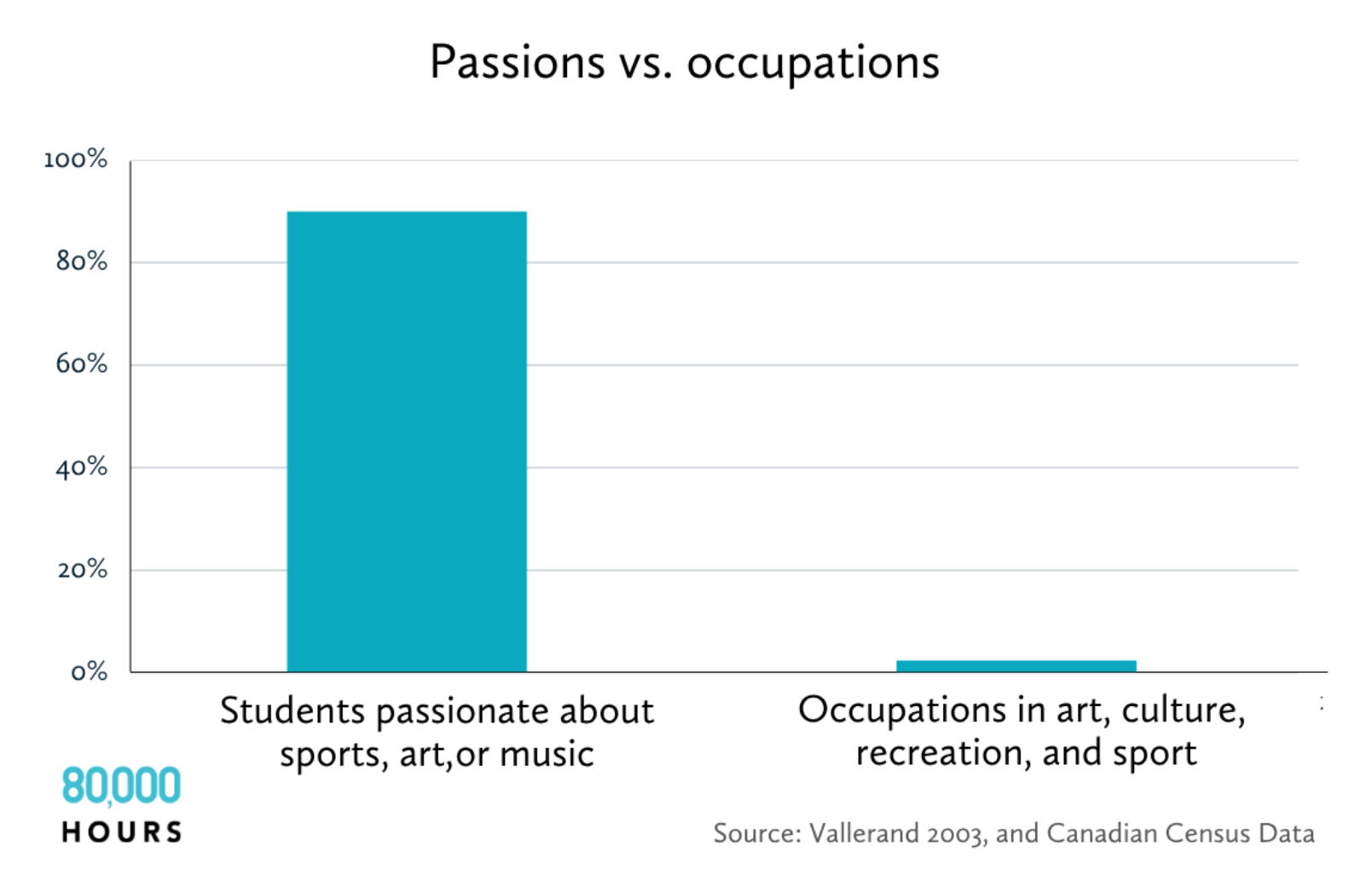
Moreover, even if you succeed in getting a job, researchers have found that the degree of match between your interests and your job correlates only weakly with job satisfaction.2
The third problem is that telling people to focus on what they’re already passionate about can make them needlessly limit their options. If you’re passionate about literature, it’s easy to think you must become a writer to have a satisfying career. But, in fact, there are probably many other jobs that could satisfy you, so long as they’re fulfilling in other ways.
Plus, our interests change over time, and more than we expect.3 Think back to what you were most interested in five years ago, and you’ll probably find it’s pretty different from what you’re interested in today. This means your interests are not an especially stable basis for career planning.
More perniciously, people often believe that their “one true passion” will be immediately obvious, leading them to eliminate options that don’t feel rewarding from the get-go. But most careers are a grind at the entry level, and you need to try things to learn what fits. That means it’s normal not to know what you’re passionate about right away. Instead, as we’re going to see, passion is something you develop over time — often in entirely unexpected directions.
We’ve worked with hundreds of people who developed passions for new career paths. Jess Whittlestone loved philosophy as an undergraduate, and was especially drawn to philosophy of mind. Naturally, she considered continuing to graduate school. But something held her back. Even if it would be intellectually interesting, if she didn’t make a difference, would it really be fulfilling?
“80,000 Hours has nothing short of revolutionised the way I think about my career.”

After trying several paths, she settled on psychology and public policy. Over time, she found roles and topics that were meaningful, and became passionate about them. Eventually, she became the director of AI policy at a leading think tank, and in 2023, TIME named her one of the 100 most influential people in AI. We’ll explain how she got there in Chapter 11.
Why you shouldn’t follow your intuition either
Even if there was such a thing as your “one true passion,” how would you actually find it? The usual way is to try to imagine different jobs and think about how fulfilling they seem. If this were a normal career guide, we’d start by getting you to write out a list of what you most want from a job, like ‘working outdoors’ or ‘working with ambitious people,’ and trying to find jobs that match. The best-selling careers book of all time, What Color Is Your Parachute, recommends exactly that. The hope is that, deep down, people know what they really want.
But they don’t. Or at least, not particularly well. You can probably think of times in your own life when you were excited about a holiday or a party — only to find that when it actually happened, it was just OK. In recent decades, research has shown how common this is. We’re not always great at predicting what will make us happiest, and we often don’t realise quite how bad we are at it.4
It turns out we’re even bad at remembering how enjoyable different experiences were, let alone predicting them. A meta-analysis of over 50 studies found we remember experiences by how enjoyable they were at their peak, or at their ending, rather than how enjoyable we’d say they were at the time.5
In a classic study, people rated a colonoscopy as less painful if it ended less painfully, even if the pain lasted longer.6 As Dan Gilbert, one of the world’s leading experts on happiness, puts it:
The fact that we often judge the pleasure of an experience by its ending can cause us to make some curious choices.
This means we can’t simply trust our intuitions when trying to figure out what will satisfy us most. We need a more systematic way of working out which job is best.
What might a more systematic approach look like? It’s tempting to assume that your dream job will meet two supposedly appealing criteria: that it’ll be easy and well paid.
This is implicit in a lot of mainstream career advice. CareerCast provides one of the leading career rankings in the US. The first four criteria they use to rank careers are:
- Is it unstressful?
- Is there good work-life balance?
- Is there high job security?
- Is it highly paid?
Essentially, less-demanding, secure, high-pay jobs are rated more highly. Based on these criteria, the number one job turned out to be: actuary. That is, someone who uses statistics to measure and manage risks in the insurance industry. This is the same answer they gave back in 2015 when I first wrote about their list, and it’s been close to the top ever since.7
Would we all be happier if we retrained as actuaries? It’s true that actuaries are more satisfied with their job than average, but they’re not among the most satisfied. And only 36% say their work is meaningful.8 This shows that the factors used by CareerCast don’t capture everything. In fact, plenty of evidence suggests that money and avoiding stress may even be counterproductive to focus on. Let’s start with money.
Don’t chase the money
It’s a cliché to say that “money can’t buy happiness,” but better pay is often people’s top priority when looking for a new job.9 When people are asked what would most improve the quality of their lives, the most common answer is “more money.”10 Which side is right?
As is often the case, the truth is somewhere in the middle. After reviewing the best studies we could find on this question, we found that money does make you happy, but only a little.
For instance, here are the findings from a huge survey in the US:
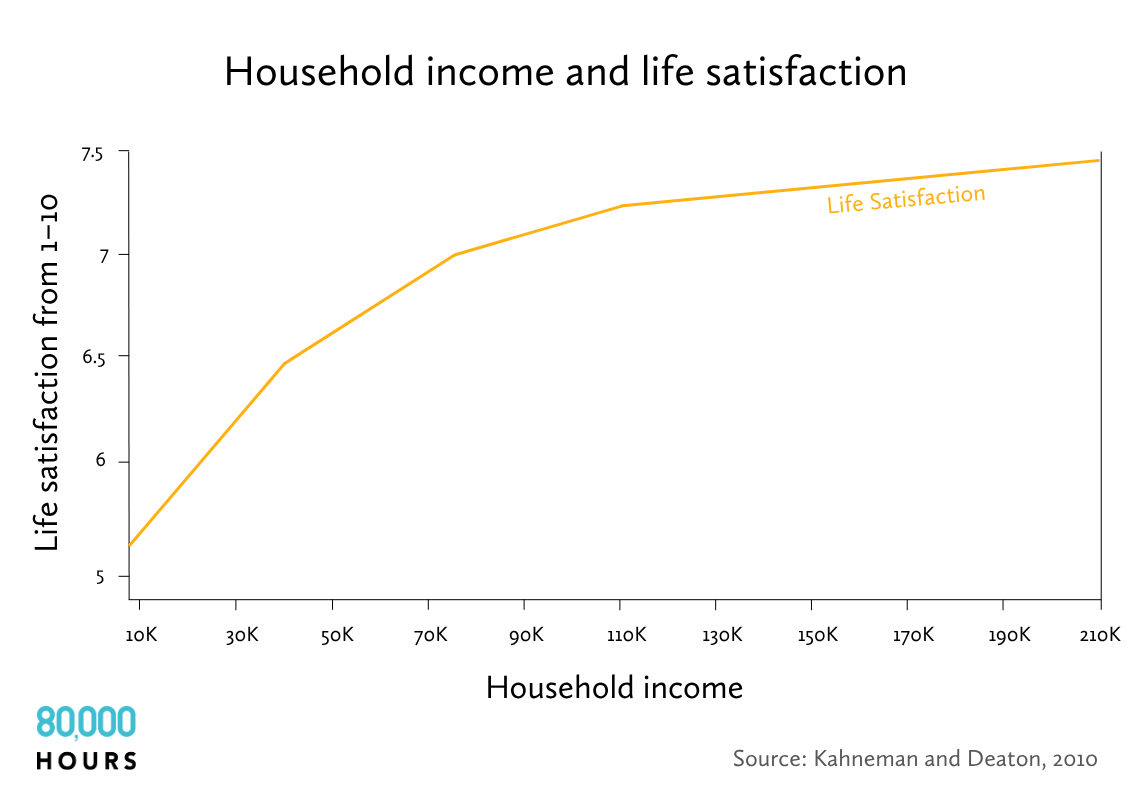
Respondents were asked to rate how satisfied they were with their lives on a scale from 1 to 10. The result is shown on the y-axis, while the x-axis shows their household income. The chart shows that an increase in pre-tax income from $40,000 to $80,000 was only associated with an increase in life satisfaction from about 6.5 to 7 out of 10. Gaining another half point requires another doubling to $160,000. That’s a lot of extra income for a small improvement.
This is hardly surprising. We all know people who’ve gone into high-earning jobs and ended up miserable. Your expenses creep up, and you soon come to take your salary for granted. At the same time, you’re working longer hours, eating into time with friends and family.
But even this might be overstating the importance of money. If we look at day-to-day mood, income appears to be even less important. The same study asked people at different salary levels whether they reported feeling happy yesterday, which the researchers called “positive affect.” The left-hand y-axis shows the fraction of people who reported “yes.” This line goes basically flat around $75,000.
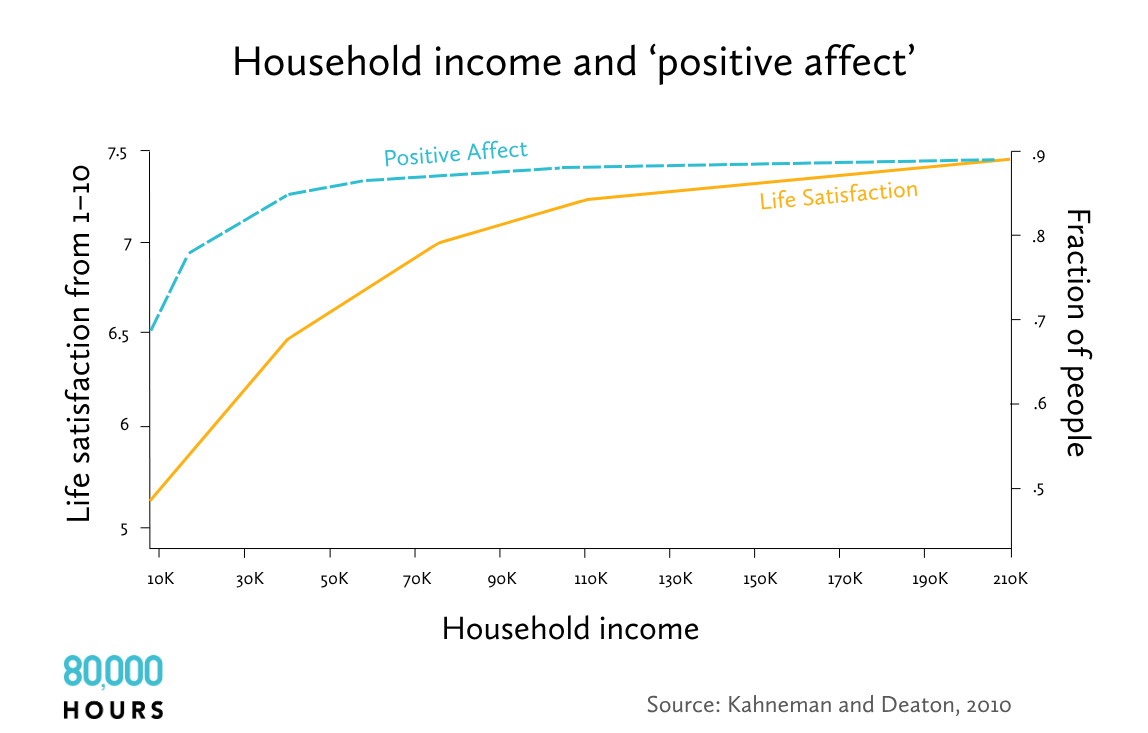
The picture is similar if we look at the fraction who reported being “not blue” or “stress-free” yesterday. (In fact, people got more stressed as incomes increased.)
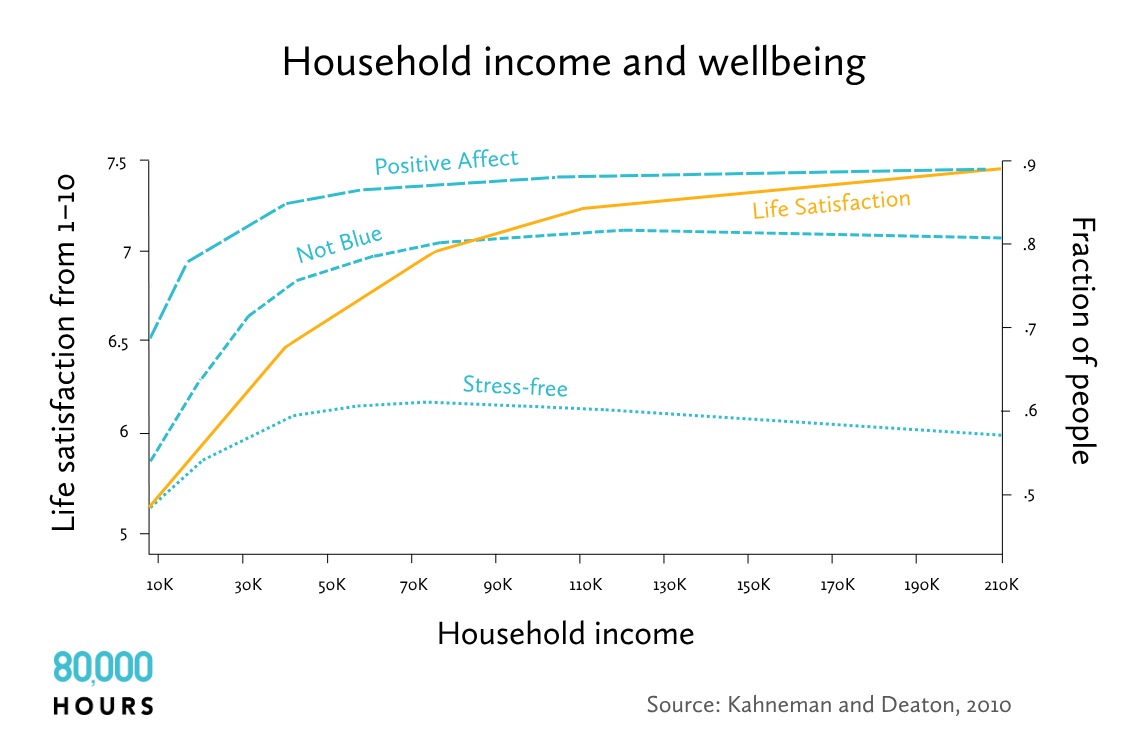
Admittedly, this debate is far from over. While this data shows that positive affect goes completely flat around $75,000, a more recent study from 2021 found that it actually continues to rise. It’s just that it rises very slowly, and more slowly than life satisfaction. This could be because high income makes people feel successful, even if it doesn’t make them happier.11
From a practical point of view, this doesn’t make much difference. Once you’re above around $100,000, money seems to make only a small difference to happiness.
Moreover, this data could still be overstating money’s importance. These studies are correlational, which means the relationship between money and happiness could be caused by a hidden third factor. For example, being healthy could make you both happier and allow you to earn more. Taking account of all the possible additional factors could reduce the impact of money even further.
How much income should you aim for, given your individual situation? The graphs in this chapter are for household income in 2009, but the average household in the US has 2.5 people. If you’re single, your costs will be a bit higher, so economists would typically say $100,000 of household income is equivalent to income of about $50,000 living alone.12 Adjusting for inflation gets you to about $75,000 in 2025.13 Each dependent you have living with you will add another half to that.
These are also averages for the US as a whole. If you live in an expensive city like New York, you’d need to add about 50% to account for the higher cost of living,14 and because our satisfaction is highly driven by how our income compares to others around us. Compared to New York, incomes and cost of living are another 10–20% higher again in Zurich, but 20–25% lower in London, Paris, and Sydney, and 60–80% lower in Shanghai.15 Compared to the US as a whole, incomes in the UK are about 40% lower16 and cost of living is about 10% lower. This suggests that $75,000 in the US is equivalent to about £42,000 in the UK,17 or $115,000 in New York.
As of 2023, the average university graduate in the US can expect to make about $77,000 per year over their working life, while the average Ivy League graduate earns over $120,000.18 In the UK, university graduates earn about £52,500, and amounts are similar in Western Europe and Australia.19 The upshot is that if you’re a university graduate in a high-income country, then there’s a good chance you end up in the range where more income has little effect on your happiness.

Don’t aim for an easy life
Many people tell us they want to find a job that isn’t stressful. And, in the past, doctors and psychologists believed that stress generally was bad for us. However, more recent evidence on stress suggests the picture is a bit more complicated.
One puzzle is that studies of high-ranking government and military leaders found they had lower levels of stress hormones and anxiety than other workers, despite sleeping fewer hours, managing more people, and having more responsibilities.20
One widely supported explanation is that having a greater sense of agency shields them from the demands of the position. In other words, if you’re facing a stressful project, but you get to decide how to go about tackling it, it’s likely you’ll feel much better than if you’re being micromanaged.
Likewise, a stressful project that’ll only last one week might not be a problem, while one that lasts for two years certainly could be. People are also much better able to tolerate stress if it’s in pursuit of a goal they consider meaningful.

In total, researchers have found that the following seven factors are important moderators of stress, and can even turn a situation that’s draining into one that’s engaging and meaningful:
| MITIGATING FACTORS | GOOD (OR NEUTRAL) | BAD |
|---|---|---|
| Intensity of demands | Challenging but achievable | Mismatched with ability (either too high or too low) |
| Duration | Short term | Ongoing |
| Control | You can decide how the work is carried out. | Work is micromanaged. |
| Power | You're given resources to tackle the work. | You have little influence over the outcomes. |
| Social support | You have supportive peers and mentors who can help with challenges. | You're isolated. |
| Mindset | Reframe challenges as opportunities and stress as helpful. | View demands as threats, stress as harmful to health. |
| Altruism | Pursuing meaningful goals | Focusing on yourself |
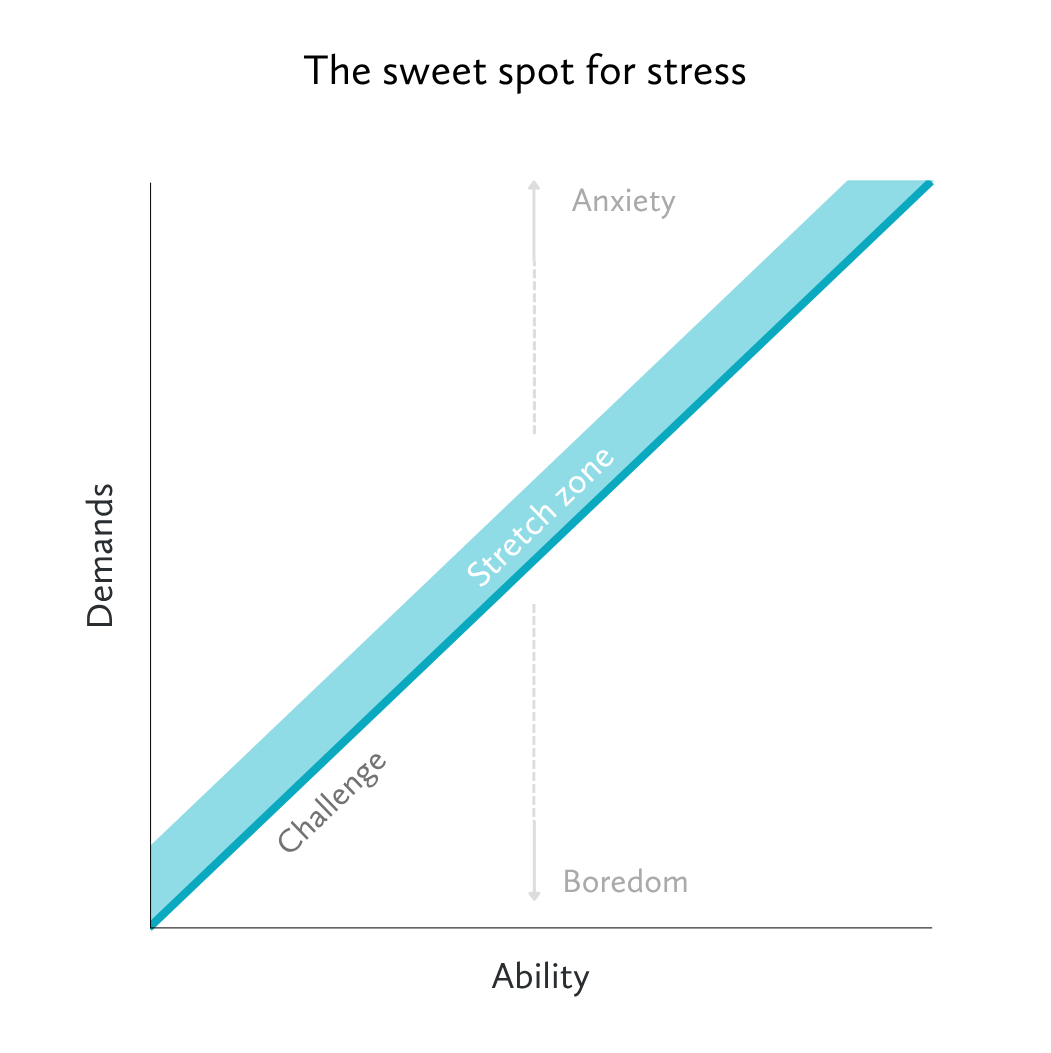
This research points to a very different conclusion about how to approach stress. Having a very undemanding job is actually bad — it’s boring. But, at the same time, facing demands that exceed your abilities is also bad because that causes harmful stress. The sweet spot is where the demands placed on you slightly exceed your current abilities — that’s a fulfilling challenge.
All this hints at an alternative way of thinking about a “dream job.” Instead of seeking out low-stress jobs, seek a supportive context and meaningful work, and then embrace tasks that challenge you.
What you should really aim for in a dream job
Instead of following your passion, be systematic in working out what will or won’t bring satisfaction. There have now been three decades of research into positive psychology — the science of happiness — to guide us towards what that might be, as well as decades of surveys and research looking at job satisfaction and motivation in particular. We’ve applied all this to make the following five criteria for a dream job. (If you want to dig into the evidence in more depth, see our evidence review.)21
The first lesson is that what really matters is not your salary, status, or even your job title, but rather what you do day-by-day and hour-by-hour.
1. Work that’s engaging
Engaging work is work that draws you in, holds your attention, and enables you to enter a state of flow — the sense of immersion that emerges when absorbed in a task. It’s the reason rambling, incoherent meetings feel like pure drudgery, while an hour spent playing a video game can feel like no time at all: games are designed to be as engaging as possible.

Why are video games engaging while so many aspects of office life aren’t? In a major meta-analysis, researchers identified the following four factors, which have been called “the most empirically verified predictors of job satisfaction”:22
- Freedom to decide how to perform your work
- Clear tasks with a well-defined start and end
- Variety in the nature of those tasks
- Feedback, so you know how well you’re doing
These factors correlate about twice as much with job satisfaction as match between your interests and your job.23 And, while they are even more important for people who especially desire accomplishment and learning, they matter for everyone.
Interestingly, these four factors are about how your work is structured, not its content. Financial admin that’s been organised to feel like a game could create a sense of flow, while being made to sit through a health and safety presentation could bore you to tears, even if it’s in service to motocross racing, which happens to be your dream industry.
This said, while video games are intensely engaging, they’re not the key to a fulfilling life, and that’s because you also need the second critical ingredient.
2. Work that helps others
Here are three ostensibly desirable and engaging jobs. And yet, when questioned, under 30% of people doing them said they found them meaningful:24
- Fashion designer
- TV newscast director
- Software engineer
The following three jobs, meanwhile, are seen as meaningful by almost everyone who does them:
- Fire service officer
- Nurse or midwife
- Neurosurgeon
What’s the difference? Well, the second set of jobs tangibly help other people. That’s what makes them meaningful.
The studies we just covered also found a fifth key factor: the significance of the tasks. Tasks are more significant the more they impact others.
On top of that is a growing body of evidence to suggest that helping others is a key ingredient of life satisfaction in general. To give just a few examples, a meta-analysis of 23 randomised studies showed that performing acts of kindness makes the giver happier. People who volunteer are less depressed and healthier. And a global survey found that people who donate to charity are as satisfied with their lives as those who earn twice as much.25
In an attempt to sum up what’s been learned by the field of positive psychology to date, its founder, Martin Seligman, listed the most important drivers of wellbeing. One of them is engagement, and another is a sense of meaning.26 While helping others isn’t the only route to a meaningful career, it’s one of the most powerful.
3. Work you’re good at
Another key ingredient of fulfilment in Seligman’s list is a feeling of competence.27 This is the feeling you get from stretching your skills, especially valuable ones. It’s intrinsically enjoyable, adds to your ability to enter a state of flow, and builds your self-confidence. For most people, it comes from getting good at their work — whatever that may be.
Competence at work is not only satisfying, it gives you the power to negotiate for the other components of a fulfilling job — like the chance to work on meaningful projects, undertake engaging tasks, and receive fair pay. If people value your contribution, it becomes easier to negotiate for what you want in return.
This is why skill ultimately trumps passion. If you pursue a career as an artist but aren’t good at it, you’ll end up doing derivative and uninspiring design for companies you don’t care about — however passionate you might be about art.
That’s not to say you should only do work you’re already good at, but you do want the potential to get good at it.
4. Work with supportive colleagues
It may sound obvious, but if you hate your colleagues and work for a boss from hell, you’re not going to be satisfied.
Good relationships are Seligman’s fourth key ingredient of wellbeing, and perhaps the most important.28 Given this, it’s great if you can become friends with at least a couple of people at work. However, you don’t need to become friends with everyone, and you certainly don’t need to like all of your colleagues. One large meta-analysis found that ‘social support’ was among the top predictors of job satisfaction.
It doesn’t mean you should feel compelled to spend evenings and weekends together — but rather refers to whether you’re able to get help when you’re struggling. Another meta-analysis found several types of ‘organisational sponsorship,’ such as easily accessible supervisor support and training opportunities, were among the best predictors of career satisfaction.
This is also not the same as saying that you should surround yourself with people just like you. People who are disagreeable and have a totally different outlook can often give you the most useful feedback, provided they care about your interests deep down. This is because they’re more likely to tell it like it is. Organisational psychology professor Adam Grant calls these people “disagreeable givers.”
When we think about dream jobs, we usually focus on the role. But who you work with is just as important. A bad boss can ruin a dream position, while even boring work can be fun if done with a friend. As we saw with engagement, this is another way in which context beats content.
5. Work that isn’t actively unpleasant
Landing your dream job isn’t only about securing these positive factors; you also need to try and avoid forces that make work actively unpleasant. In the research we surveyed, each of the following was linked to job dissatisfaction:
- A long commute
- Very long hours
- Pay you feel is unfair
- Job insecurity
For example, one survey of over 60,000 people found that long commutes were associated with lower life satisfaction. The worst effects were associated with journey times lasting between 61 and 90 minutes. (And the worst mode of transport was buses, which, as a Londoner, makes perfect sense to me.)
Long hours can be handled when they are part of a time-bounded, meaningful challenge, but excessive and persistently long hours crowd out other parts of your life. Likewise, even if pay is only weakly correlated with happiness, the sense that you are being compensated unfairly compared to your peers is another matter.29
If your job is in the wrong city, that’s going to hurt your relationships, and satisfaction with location is a significant driver of life satisfaction.30 Likewise, look out for other major conflicts between your job and what you value in the rest of your life.
Although these sound obvious, people often overlook them. The negative consequences of a terrible commute can be enough to outweigh many other positive factors.
You don’t have to get all the ingredients of a fulfilling life from your job. It’s possible to simply find a job that pays the bills, and find meaning and satisfaction elsewhere. Many people get a sense of competence from a side project, or help others through philanthropy or volunteering.
Do what matters
How can we sum this all up? Rather than “follow your passion,” our slogan for a fulfilling career is: get good at something that helps others. Or more simply: do what matters.
We open with “get good” because once you get good at something that others value, you’ll not only have a sense of competence, you’ll also have more career opportunities in general, giving you a better chance of securing engaging work, supportive colleagues, and your other basic conditions.
You can have everything else in place, however, and still find your work meaningless. This is why you need to find a way to help others too.
Helping others is not only fulfilling; it can also make you more successful. Make it your mission to help others, and people will want to help you succeed. This sounds like it could be wishful thinking, but there’s some empirical evidence to back it up.
In his book Give and Take, Adam Grant argues that people with a ‘giving mindset’ are more likely to end up among the most successful, both because they’re more motivated by their desire to give, but also because they get more help.31
And, just in case you prefer appeals to authority over scientific studies, the idea that helping others is the key to a fulfilling life is a theme that recurs throughout many moral and spiritual traditions:
Set your heart on doing good. Do it over and over again and you will be filled with joy.
Buddha
A man’s true wealth is the good he does in this world.
Muhammad
Every man must decide whether he will walk in the light of creative altruism or in the darkness of destructive selfishness.
Martin Luther King, Jr
But even more so than in the age of these spiritual leaders, we’re going to see that each of us has an enormous opportunity to help others. Ultimately, this is the real reason to do it.
We can now see that “follow your passion” gets it backwards. Rather than start with our preexisting passions, hoping that success and fulfilment will follow, we should start by “doing what matters.” By building valuable skills and devoting them to meaningful challenges, passion and a truly fulfilling life will emerge over time.
Hopefully this is a relief — you don’t need to figure out your one true passion right away. In fact, you have more options for a fulfilling career than you think. Twenty years ago, I would never have imagined being passionate about careers advising — that would have sounded totally dull — but here I am, writing this guide.
This is the reason we founded 80,000 Hours — our mission is to help you find a career that contributes. It’s best for you, and it’s best for the world. The rest of this guide will unpack how, starting with a simple question: which jobs actually help people?
Put into practice
These five ingredients can act as guiding lights. Here are some exercises to help you start using them in your own career.
1. Practice applying the five factors. Pick two career options you’re interested in, then score them from 1–5 on each factor. If you find it hard to gauge, try to speak to someone in the career and ask them to break down a typical day and company culture.
- Engaging work
- Work that helps others
- Work you’re good at
- Supportive colleagues
- Meets your basic needs
2. Create your own list of the 4–8 most important factors. The five we highlight are just a starting point — there may be other factors that are especially important to you, or ways to make them more specific. Here are some prompts:
- Can you make any of the factors more specific? For example, what kinds of people do you find most supportive? Which basic conditions are most important to you?
- Are there other important personal goals that you want to fulfil with your career, such as living a certain lifestyle, or artistic or spiritual goals?
- When have you been most fulfilled in the past? What did these times have in common? (Bonus: try keeping track of this in real time going forward to avoid the biases in your memory.)
3. What job would you do if money were no object, or if you only had 10 years left to live? Think both about your ideal life situation, but also how an ideal day would unfold hour-to-hour. While we wouldn’t recommend relying only on your imagination, these prompts might give you more ideas for fulfilling careers or how to customise your list of factors.

Have a greater positive impact with your career
Join our newsletter to receive a free copy of our new career guide, weekly high-impact job opportunities, and updates on our research.
We’ll never share your email, and you can unsubscribe in one click.

Notes and references
- “Occupations in art, culture, recreation, and sport, except management” accounted for an average of 2.8% of all jobs in Canada between January and December 2003.
“Table 14-10-0310-01: Employment by occupation, monthly, seasonally adjusted.” Statistics Canada, 2003, web.archive.org/web/20251206100245/https://www150.statcan.gc.ca/t1/tbl1/en/tv.action?pid=1410031001.↩
- Interest-match is the foundation of many career tests and has been extensively studied by psychologists. The Strong Interest Inventory, for instance, asks about interest in certain types of industries and skills, and then gives a higher score to jobs matching those industries. All attempts have found these kinds of measures are a weak predictor of job satisfaction or performance (r=0.1 to 0.3). A recent meta-analysis looked at over 100 studies and found a correlation of only 0.19 between degree of fit and job satisfaction. We’ll come back to this evidence in Chapter 10.
Hoff, K. A., et al. “Interest fit and job satisfaction: A systematic review and meta-analysis.” Journal of Vocational Behavior, vol. 123, 2020, p. 103503, doi.org/10.1016/j.jvb.2020.103503.↩
- A study of over 19,000 people found that people consistently underpredict how much their personality, values, and preferences would change in the next decade.↩
- There has been an extensive programme of research into how good humans are at predicting the effects of future events on their emotional wellbeing. It began with Daniel Kahneman and Jackie S. Snell in the early 1990s, and was led in the 2000s by Daniel Gilbert. Much of the research is summarised in Gilbert’s book Stumbling on Happiness. In light of the replication crisis, we expect the magnitude of these effects have been overstated, but still apply.↩
- A 2022 meta-analysis looking at 58 independent studies, with a cumulative sample size of around 12,500 people, found “strong support” for the peak–end rule:
The peak–end effect on retrospective summary evaluations was: (1) large (r = 0.581, 95% Confidence Interval = 0.487 — 0.661), (2) robust across boundary conditions, (3) comparable to the effect of the overall average (mean) score and stronger than the effects of the trend and variability across all episodes in the experience, (4) stronger than the effects of the first (beginning) and lowest intensity (trough) episodes, and (5) stronger than the effect of the duration of the experience (which was essentially nil, thereby supporting the idea of duration neglect).
Balca Alaybek, et al.
Other studies have found that it’s the most memorable or unusual moments that mattered, rather than the most intense ones.
The peak–end rule predicts approximately the correct level of happiness, but the correlations of the peak–end average with the overall recalled happiness are generally lower than those obtained by considering the participants’ happiness in the most memorable or most unusual 24-h period […] Remembered overall happiness seems to be better predicted by end happiness than by peak or trough happiness, and the comparative failure of the peak–end rule appears to stem more from the peak than from the end.
Simon Kemp et al.
Alaybek, Balca, et al. “All’s well that ends (and peaks) well? A meta-analysis of the peak-end rule and duration neglect.” Organizational Behavior and Human Decision Processes, vol. 170, May 2022, p. 104149, doi.org/10.1016/j.obhdp.2022.104149.
Kemp, Simon, et al. “A test of the peak–end rule with extended autobiographical events.” Memory & Cognition, vol. 36, no. 1, January 2008, pp. 132–138, doi.org/10.3758/mc.36.1.132.↩
- Redelmeier, Donald A., et al. “Memories of colonoscopy: A randomized trial.” Pain, vol. 104, no. 1, July 2003, pp. 187–194, doi.org/10.1016/s0304-3959(03)00003-4.↩
- Over time it’s gone up and down their rankings, but has generally been among the top careers.↩
- PayScale’s surveys cover millions of workers. The most recent survey, which asked about job satisfaction and job meaningfulness, was conducted from 2013–2015. 36% reported finding their work meaningful and 80% were satisfied with their job, though many jobs were rated over 80%, so actuary isn’t above average.
More recent surveys appear to show similar or worse results. For instance, Career Explorer has an ongoing survey that’s been taken by millions of workers. They find actuary is in the bottom 5% of jobs for job satisfaction, and also very low on meaning.↩
- A Gallup survey in October 2021 asked 13,085 US employees what they considered most important when deciding whether to accept a new job offered by a new employer. 64% of people said that “a significant increase in income or benefits” was “very important,” compared to 61% for “greater work-life balance and better personal well-being,” 58% for “the ability to do what they do best” and 53% for “greater stability and job security.”
The survey was self-administered on the web. There are a number of possible sources of bias — including if the survey respondents were paid, which is unclear from the Gallup methodology. That said, Gallup did weight samples to correct for non-response by adjusting the sample to match the national demographics of gender, age, race, education, and region.
Wigert, Ben. “The top 6 things employees want in their next job.” Gallup, 20 February 2022, web.archive.org/web/20260124212652/https://www.gallup.com/workplace/389807/top-things-employees-next-job.aspx.↩
- From the same meta-analysis:
When individuals are asked what would most improve the quality of their lives, the most common response is a higher income.
Judge, Timothy A., et al. “The relationship between pay and job satisfaction: A meta-analysis of the literature.” Journal of Vocational Behavior, vol. 77, no. 2, October 2010, pp. 157–167, doi.org/10.1016/j.jvb.2010.04.002.↩
- A 2021 study by Matthew Killingsworth found that positive affect does rise with income, even above $75,000 a year. However, it found that this relationship, like life satisfaction, was approximately logarithmic, meaning that as an individual’s income increases, their wellbeing increases at a slower and slower rate. As a result, above $75,000 a year, increases in wellbeing are very small. The study also found that as income increased, positive affect rose more slowly than life satisfaction (which was also approximately logarithmic).
Hazell and Plant, 2021, provides a critical review of Killingsworth, 2021, and concludes:
“The new data suggests that increases in happiness don’t stop after an individual reaches an income of $75,000. Instead, the increases continue, and perhaps plateau, at a later point. However, this new insight doesn’t significantly change the conclusions drawn after Kahneman and Deaton’s 2010 study. It seems that chasing ever-increasing amounts of money is an ineffective way to find happiness for ourselves.”
In 2023, Kahneman looked again at his old data, and noticed that a high proportion of people reported (nearly) maximum happiness scores. This could have caused a flattening of the curve despite actual increases in happiness. In collaboration with Killingsworth, Kahneman published new research arguing that the happier people already were, the less their returns diminished. The happiest people continued to become happier with incomes of over $100,000, but the least happy people saw almost no benefit from additional income of any amount.
Killingsworth, Matthew A. “Experienced well-being rises with income, even above $75,000 per year.” Proceedings of the National Academy of Sciences, vol. 118, no. 4, 18 January 2021, doi.org/10.1073/pnas.2016976118.
Killingsworth, Matthew A., et al. “Income and emotional well-being: A conflict resolved.” Proceedings of the National Academy of Sciences, vol. 120, no. 10, March 2023, doi.org/10.1073/pnas.2208661120.
Hazell, Julian, and Michael Plant. “Can money buy happiness? A review of new data.” Effective Altruism Forum, 28 June 2021, forum.effectivealtruism.org/posts/C6bXpYCrqCFdhSYgh/can-money-buy-happiness-a-review-of-new-data.↩
- The average household in the US has 2.5 people, but of course this is just an average across a wide range of family structures. Larger households enjoy ‘economies of scale’ by sharing houses, cars, energy costs, and so on. This makes it tricky to say what the equivalent of a household income is for a single individual.
Standard conversion rates are the following:
A single individual has an equivalence score of 1.
A single extra adult adds another equivalence score of 0.5.
Adding a young child to this adds an equivalence score of 0.3, while a teenager costs another 0.5.
As a result, a couple can achieve the same lifestyle as an individual with 50% more income; a couple with a young child can achieve the same lifestyle as an individual with 80% more income; a couple with a teenager require an income twice as high.
These are approximations, but reasonable ones used by international organisations. (The Institute for Fiscal Studies table gives conversion rates from a childless couple to a household. Dividing by 0.67 — the conversion rate to a single individual — will give you the numbers we listed above.)
For the sake of simplicity, we will assume that, on average across their adult lives, people are in a household with an adult couple and a child. This is just an average — some people will be single, while some will be supporting multiple children, at least for some of their lives.
Using this approximation means that a single individual requires about 1/1.9 = 53% as much as a typical household, averaged over their adult lives, to achieve the same standard of living. In this case, 53% of $100,000 for a household represents $53,000 for an individual.
“About the tool.” Institute for Fiscal Studies, 20 September 2022, web.archive.org/web/20251017075317/https://ifs.org.uk/about-tool.↩
- The Consumer Price Index in January 2009 was 211, and as of July 2025 was 323 — about 53% higher.↩
- In 2024, New York GDP per capita was $115,000, compared to about $86,000 for the US as a whole — about 30% higher. Interestingly, this is less than the difference in cost of living, suggesting you come out behind by moving there.↩
- While the cost of living in Shanghai is about 60% lower than New York, incomes are about 80% lower, at around $20,000. That means someone earning $45,000 in Shanghai might well feel richer than someone earning $115,000 in New York — even though those incomes are equivalent after adjusting for cost of living — because they’re still earning over twice as much as the people around them.↩
- We calculated this figure by comparing GDP per capita in the US and the UK.
As of 2025, GDP per capita in the US is around $86,000.
In the UK, it’s roughly equivalent to $53,000.↩ - Taking an average of the difference in cost of living (0.9x) and difference in incomes (0.6x), means $75,000 in the US would be equivalent to about $56,000 in the UK. Converting to pounds at 0.74 gets you to £42,000.↩
A bachelor’s degree holder earns, at the median, $2.8 million during a lifetime, which translates into average annual earnings of about $70,000.
Carnevale, Anthony P., et al. The college payoff: Education, occupations, lifetime earnings. Georgetown University Center on Education and the Workforce, 31 August 2023, cew.georgetown.edu/wp-content/uploads/collegepayoff-completed.pdf.
This figure was for 2021, but wages have grown since then. The median annual salary for a bachelor’s degree holder in 2024 was $80,236.
“Education pays.” U.S. Bureau of Labor Statistics, 28 August 2025, bls.gov/emp/chart-unemployment-earnings-education.htm.
It’s hard to find precisely comparable data for just Ivy League graduates. PayScale found a median mid-career salary of over $135,000, where mid-career is defined as having worked more than 10 years.
“Top Ivy League schools.” PayScale, web.archive.org/web/20230214190423/https://www.payscale.com/college-salary-report/best-schools-by-type/bachelors/ivy-league-schools.
Our guess is that the PayScale data is too high because people with higher incomes will be more likely to fill out the survey. On the other hand, income only peaks after 20–30 years, so the figure for 10-plus years probably underreports the overall average. Moreover, the median will be less than the mean.
Overall, we’re pretty confident that the mean lifetime average for Ivy League graduates is over $120,000.
If you want to estimate your future income, then you should also account for future wage growth (which has been about 2% per year, historically). We ignore this here, and only estimate current income.↩
- In 2015, The Sutton Trust found that UK college graduates earned about £1,440,000 over their lifetimes, which is about £35,000 per year over a 40-year career.
There’s been 50% wage growth since 2015, making this equivalent to about £52,500 today.
In 2017, typical career earnings for Australian graduates totalled $3,310,240 AUD (Australian dollars), or around $68,963 AUD per year. Adjusting for inflation, this is about $86,022 AUD in 2024 — roughly equivalent to £42,240, (without adjusting for wage growth between 2017 and 2024).
“Average weekly earnings in Great Britain: June 2025.” Office for National Statistics, 9 June 2025, web.archive.org/web/20251114082745/https://www.ons.gov.uk/employmentandlabourmarket/peopleinwork/employmentandemployeetypes/bulletins/averageweeklyearningsingreatbritain/june2025.
Hanna, Conal. “A university degree is worth $1,180,112 over the course of a lifetime.” The Sydney Morning Herald, 27 October 2017, web.archive.org/web/20260126023641/https://www.smh.com.au/money/a-university-degree-is-worth-1180112-over-the-course-of-a-lifetime-20171026-gz8mgd.html.
Kirby, Philip. Levels of success: The potential of UK apprenticeships. The Sutton Trust, October 2015, suttontrust.com/wp-content/uploads/2019/12/Levels-of-Success3-1.pdf.↩
As leaders ascend to more powerful positions in their groups, they face ever-increasing demands. As a result, there is a common perception that leaders have higher stress levels than nonleaders. However, if leaders also experience a heightened sense of control — a psychological factor known to have powerful stress-buffering effects — leadership should be associated with reduced stress levels.
Sherman, Gary D., et al. “Leadership is associated with lower levels of stress.” Proceedings of the National Academy of Sciences, vol. 109, no. 44, 30 October 2012, pp. 17903–17907, doi.org/10.1073/pnas.1207042109.↩
- Martin Seligman sums up the field’s findings about the most important ingredients of a fulfilling life as:
Positive emotion — feeling happy day-to-day; Engagement — challenging, absorbing tasks; Meaning — having a purpose higher than yourself; Relationships — connecting with others; Achievement — being good at something.
In formulating our key ingredients for a dream job, we took these into consideration, in addition to the most important predictors of job satisfaction. We then reviewed the evidence for and against each of them, especially in a work context.↩
- In a review of the literature, organisational psychologist Timothy Judge concluded:
There are many possible influences on how favorably one appraises one’s job, and numerous theories of job satisfaction have attempted to delineate these influences. Empirical evidence, however, has suggested only one clear attribute of the work itself that consistently influences job satisfaction — the cognitive challenge of the work. The empirical data suggest that intrinsic job characteristics [the 4 factors + meaning] are the most consistently significant situational predictor of job satisfaction.
Judge, Timothy A., and Ryan Klinger. “Promote job satisfaction through mental challenge.” Handbook of Principles of Organizational Behavior, edited by Edwin A. Locke, Blackwell Publishers, 2000, pp. 75–89.↩
- In a meta-analysis from 2007, each of these four factors were found to correlate 0.4 with job satisfaction on average, making them among the strongest predictors. In comparison, measures of interest-match only correlate 0.1 to 0.3 (as discussed in the earlier section on following your passion).
Humphrey, Stephen E., Frederick P. Morgeson, and Jon D. Nahrgang. “Integrating motivational, social, and contextual work design features: A meta-analytic summary and theoretical extension of the work design literature.” Journal of Applied Psychology, vol. 92, no. 5, 2007, pp. 1332–1356, doi.org/10.1037/0021-9010.92.5.1332.↩
- Based on PayScale surveys of over 2.7 million Americans.
“Most and least meaningful jobs methodology.” PayScale, web.archive.org/web/20260102125502/https://www.payscale.com/data-packages/most-and-least-meaningful-jobs/methodology.↩
- Part of the reason for the correlation is that happier people give more.
However, we expect there’s still a benefit. For a more comprehensive review of the question, see “Giving without sacrifice.”Mogensen, Andreas. Giving without sacrifice. Giving What We Can Research, web.archive.org/web/20170406103218/https://www.givingwhatwecan.org/sites/givingwhatwecan.org/files/attachments/giving-without-sacrifice.pdf.
“The happiness of giving: Evidence from the German socioeconomic panel, that happier people are more generous.” Journal of Happiness Studies, vol. 17, no. 5, 14 September 2015, pp. 1825–1846, doi.org/10.1007/s10902-015-9672-2.↩
- These are part of Seligman’s PERMA framework (positive emotions, engagement, relationships, meaning, achievement) introduced in his book Flourish. These factors appear to be widely accepted across the field.↩
- As well as being part of Seligman’s PERMA framework (under the name of achievement), mastery and similar factors appear in other prominent theories of wellbeing and motivation. For instance, ‘competence’ is one of the three key factors in self-determination theory (along with ‘autonomy,’ which we group under engagement, and connectedness, which we group with the next factor). See more in our article on job satisfaction.
Ryan, Richard M., and Edward L. Deci. “Self-determination theory and the facilitation of intrinsic motivation, social development, and well-being.” American Psychologist, vol. 55, no. 1, 2000, pp. 68–78.↩
- Self-determination theory also includes relationships (often referred to as relatedness) as one of its three key ingredients.
In an article discussing PERMA, Seligman says:
When asked what, in two words or fewer, positive psychology is about, Christopher Peterson, one of its founders, replies, ‘Other people.’ Other people is the best antidote to the downs of life and the single most reliable up.
Seligman, Martin E. P. “Happiness is not enough.” Authentic Happiness Newsletter, 2011, authentichappiness.sas.upenn.edu/newsletters/flourishnewsletters/newtheory.↩
- This has been found in numerous correlational studies.
In one study, a design was used to control for confounding variables. It randomly assigned people to either be able to find out what their peers earn, or not (the control group). Those who were able to find out what their peers earned and found out that they earned less than their peers reported less job satisfaction and had higher intentions to leave their jobs than those in the control group.
Card, David, et al. “Inequality at work: The effect of peer salaries on job satisfaction.” American Economic Review, vol. 102, no. 6, 1 October 2012, pp. 2981–3003, doi.org/10.1257/aer.102.6.2981.
Clark, Andrew E., and Andrew J. Oswald. “Satisfaction and comparison income.” Journal of Public Economics, vol. 61, no. 3, September 1996, pp. 359–381, doi.org/10.1016/0047-2727(95)01564-7.
Hamermesh, Daniel S. “The changing distribution of job satisfaction.” The Journal of Human Resources, vol. 36, no. 1, Winter 2001, pp. 1–30, doi.org/10.2307/3069668.
Frey, Bruno S., and Alois Stutzer. “What can economists learn from happiness research?” Journal of Economic Literature, vol. 40, no. 2, June 2002, pp. 402–435, doi.org/10.1257/002205102320161320.
Luttmer, E. F. “Neighbors as negatives: Relative earnings and well-being.” The Quarterly Journal of Economics, vol. 120, no. 3, 1 August 2005, pp. 963–1002, doi.org/10.1093/qje/120.3.963.↩
- The correlation coefficients between overall happiness and various factors are: financial satisfaction (.369), job satisfaction (.367), and place satisfaction (.303). Compared with income (.153), home-ownership (.126), and age (.06).
Florida, Richard L. Who’s your city?: How the creative economy is making where to live the most important decision of your life. Basic Books, 2009.↩
- One caveat is that givers also end up more unsuccessful if they focus too much on others and burn out. So you also need to make sure you get the other ingredients of job satisfaction, rather than only focusing on others.↩