

Our cultural values
The values
- Ambitious, long-term impact
Increase wellbeing for moral patients over the long term. - Team mentality
We’re teammates with each other, our users, and the community. - Prioritisation and urgency
Make the most important things happen soon. - Good judgement
Reason well and show your work, then make the call and keep updating. - Proactive ownership
Take responsibility and be generative.
Ambitious, long-term impact is our anchoring value that the others act in service of. If there’s a conflict, we prioritise it first (though not by violating side constraints or naively maximising).
How we use them
Our values are the high-level principles we use when making day-to-day decisions at 80,000 Hours. They guide our plans, actions, and hiring to help us pursue our strategic focus by:
- Keeping salient what’s important
- Providing rules of thumb for how to act under uncertainty
- Shaping our team and practices
- Keeping everyone on the same page as we grow
The values are partly descriptive — capturing what’s already important and distinctive about 80,000 Hours’ culture — and partly aspirational — motivating how we’d like to act going forward.
In more detail
1. Ambitious, long-term impact
Increase wellbeing for moral patients over the long term
The purpose of everything we do is to maximise our long-term positive impact.1 It underlies our decision making, strategic focus, and orientation to our work. We’re here to help others, including those who don’t have a voice today (like future generations and digital beings) and we want to be ambitious in how we go about it.
We think that if 80,000 Hours fulfils its potential, we’ll have made a major contribution to some of the world’s most pressing problems — by being a main source of dedicated talent for these problems and by improving the world’s position going into the arrival of AGI. These are hard goals, but with ambition and focus we think we can make a dent.
More concretely, we aim to:
- Keep in mind our high-level goals when making decisions. We want to orient to our work with compassion for our beneficiaries; favour actions that pay off over the long term, rather than too narrowly prioritising short-term outcomes and metrics; and ask ourselves whether our actions will move the needle on our strategic goals.
- Regularly ask ourselves how our work can have a lot more impact. We think the best version of a project can matter far more than a good one, so it’s worth spending some time checking whether there are things we should be deprioritising or ways to reorient to a project to make it much more ambitious.
- Avoid anchoring too hard on what’s safely achievable. We want to take high expected value bets, even if this means sometimes failing. It’s valuable to be generative and innovative, and we’ll aim to celebrate when we take sensible risks that don’t pay off.
- Build capacity, including our own, so that we can achieve more in the future. This should happen both at the team-growth level and in terms of cultivating personal development and energy.
2. Team mentality
We’re teammates with each other, our users, and the community
Our goal of increasing wellbeing over the long term is demanding, but we’re not working on the project alone: 80,000 Hours is an org made up of incredibly motivated, caring individuals; we have many users (and potential users) who are excited to use their careers to do the most good; and we’re working within the EA and AIS communities, which have many shared values and goals with us.
By cultivating this feeling we’re on the same team, we’ll naturally orient to one another with lots of the values here. By applying the following examples of cooperation, trust, and mutual caring both internally and externally, we can better achieve our goals since they’ll help us stay coordinated and motivated longer term.
More concretely:
Cooperation and trust
- Use the red-face test to check whether our actions are honest and credible: ask ourselves whether it’d feel embarrassing to describe our plan to someone whose integrity we deeply respect, and if so, reconsider.
- Treat people like adults, saying what we actually believe in a way that helps them to make a good decision by their own lights.
- We want to be persuasive but not manipulative, which includes: communicating transparently; using strong reasoning; not using cherrypicked facts or saying things that will predictably mislead users; avoiding too much clickbait or hyperbole; not using negative emotions like fear, anxiety, or inadequacy as a persuasion tactic; etc.
- We also want to communicate clearly and kindly in cases where we can’t help someone (which will come up often, as people have varied needs and skills and we have to prioritise). Give an honest picture and point them elsewhere if relevant.
- Say what’s true and necessary, with kindness. By sharing ideas, thoughts, and feedback constructively, we can progress conversations efficiently and help others improve.
- Disagree productively. We aim to assume good faith and be curious, voice disagreements directly and early, be proactive about resolving frictions, and get behind a decision once it’s been made.
- Give visibility by default. By working in public when it’s not too costly, we can increase our surface area for solving problems, learn faster, and avoid duplication of effort. This applies to:
- Making information, decisions, and thought processes visible in Slack, so others can contribute ideas and feedback. Most of our Slack channels are shared org-wide for this purpose.
- Sharing learnings and what we’re up to with other organisations when we can.
- Giving users an accurate representation of our views, so they can make informed decisions.
- Value others’ time. We want to present information in an intuitive, user-friendly way which prioritises clarity. This includes giving orienting notes and only asking for what we need.
Mutual caring
- Show appreciation for colleagues, other organisations, users, and people who want to contribute but aren’t in a position to help right now.
- Help others achieve their goals by giving feedback, lending our skills, holding each other accountable, and noticing when someone is hitting their limits.
- We give Watch Team Back Up (WTBU) — flagging potential mistakes or balls that might be dropped, without assuming that the person wouldn’t have caught it.
3. Prioritisation and urgency
Make the most important things happen soon
Some plausible AI timelines mean that we might not have long before the world looks very different, so we want to make the most important work happen soon. To achieve that, we need to focus on the things we judge to be the most valuable and deprioritise everything else. And we need to approach our priorities with appropriate urgency — working hard and efficiently, but not unsustainably.
More concretely:
Prioritisation
- Act on what’s most important. There are many promising opportunities, but we think that the most effective usually have far more impact than the median, and we still face steep tradeoffs for capacity. To get the most valuable stuff done, we need to be in triage mode.
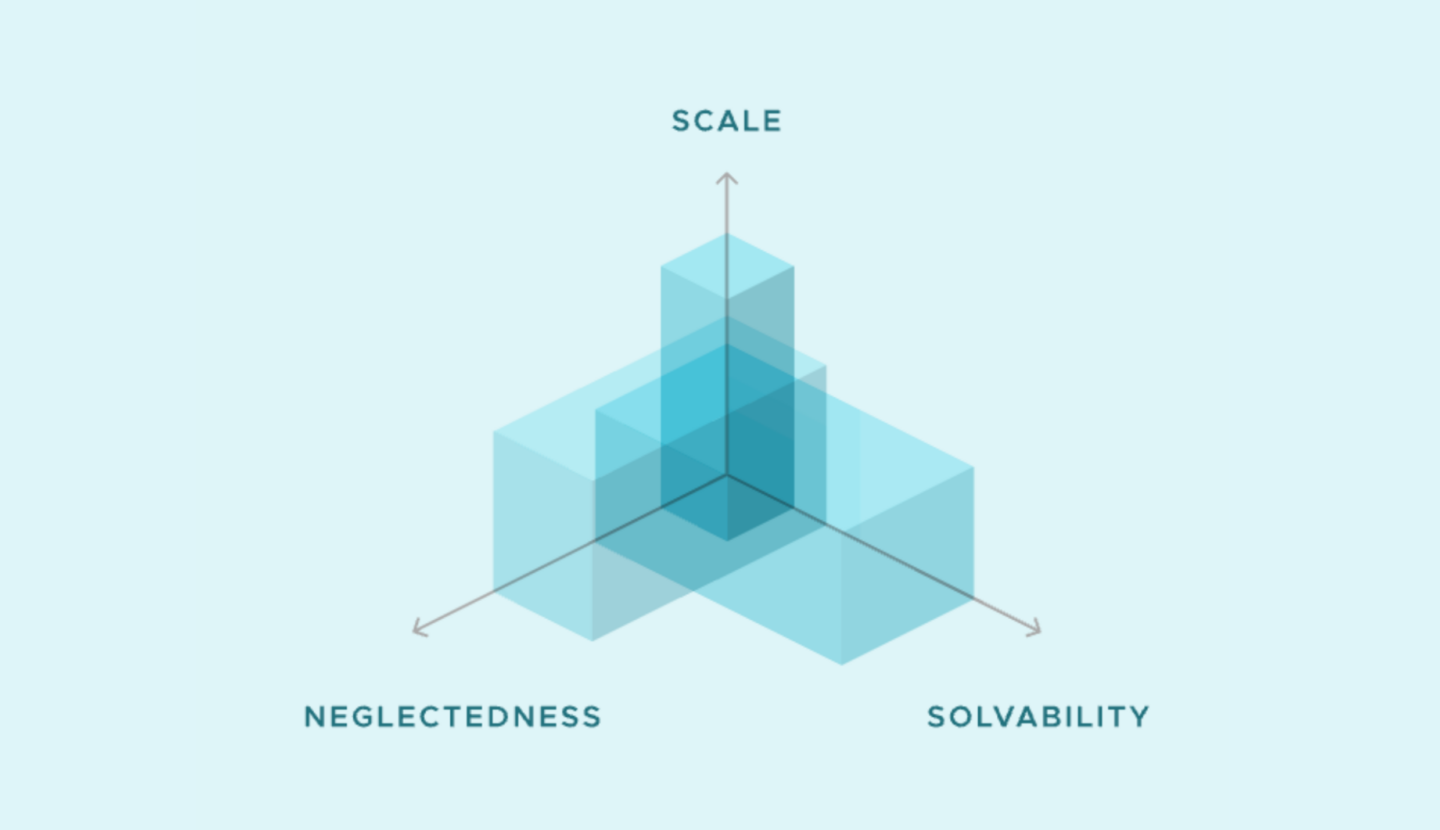
- Although we can’t always be confident in what’s most important, we can make a reasonable guess by comparing projects, using the scale-neglectedness-solveability framework, and getting input from others.
- And we should try to avoid things that look good just because they’re recent, shiny, or socially desirable.
- Say no to everything else. To focus on the top priorities, we need to be ruthless about turning everything else down… even though that’s often painful. We should celebrate saying no, and remember that doing so enables us to ship the most useful deliverables sooner.
- This also means evaluating whether there’s anything that we’re currently doing that we should drop — seeking to avoid the sunk cost fallacy, practising the reversal test,2 and periodically clearing out accumulated low-value tasks.
Urgency
- Be efficient. We think about what the best route is to the outcome we want, act decisively, and prioritise getting unblocked if something is slowing us down.
- Being efficient often means moving quickly through actions, but it sometimes means slowing down to avoid hard-to-fix or time-intensive mistakes. Slowing down and double checking particularly makes sense in places where we’re interacting with a large number of users, handling sensitive data, or making an irreversible call.
- Value time highly, both that of ourselves and others. We take sensible opportunities to trade money with time, say no to things that don’t meet our bar, and look for ways to improve our output.
- Point out ways to minimise bureaucracy. We want our systems to be useful and clear, and appreciate opportunities to streamline things. We use RAPIDs to make major decisions, minimising whose agreement is required while creating opportunities for input to increase transparency and improve the quality of decisions.
- Don’t confuse urgency with working more hours. We want people to use their work time wisely, not work more than is sustainable for them. We need to jog so that we can sprint when we need to.
- That’s not to say it isn’t valuable when people work a lot (it is!), but it only pays off if it’s sustainable.
4. Good judgement
Reason well and show your work, then make the call and keep updating.
80,000 Hours tries to answer very challenging questions — about the world, our advice, and our strategy — under a lot of uncertainty. We can’t wait for certainty before acting, so we act on our current best guess while continuing to look out for and correct mistakes, letting us move fast while staying grounded.
More concretely, we aim to:
- Take a scout mindset: we’re aiming to find out what’s true rather than be right, which means holding our views as a best guess and updating when the world tells us something new.
- We want to stay curious, weigh the evidence by its strength, be wary of motivated reasoning and confirmation bias, and avoid getting attached to our beliefs.
- To facilitate this, we regularly seek advice and feedback from external experts, in addition to others on the team, and aim to show that it’s okay to change our minds.
- Show our work, sharing the reasoning behind our conclusions and how confident we are, rather than just giving the bottom line. This allows others to weigh in, build on our thinking, and catch mistakes.
- We also do this in our external content so users can make an informed decision — we aim to be appropriately hedged in our views, back up key claims, and correct things we no longer endorse. We balance this with being engaging and forceful.
- Be decisive. We don’t feel like we need certainty before making a decision. Instead, we aim to form a sensible, resilient view, act on it, and update our views as we get more information.
- Periodically ask, “How might this be wrong?” The world is fast-moving and complex, and we’re fallible, so it’s important to keep looking for mistakes and evidence that will improve our actions.
- For important decisions and projects, we often run a pre-mortem and write out uncertainties, alternatives, and counter-arguments.
- There are lots of topics we’ve changed our minds on in the past, and we expect there to be many more in the future!
- Notice our confusion and ask probing questions to help detangle it.
5. Proactive ownership
Take responsibility and be generative
Whatever your role, doing it well adds to what 80,000 Hours can achieve overall — whether that’s advisors owning the quality of their advice, hosts feeling responsible for every episode they ship, or ops staff delivering their remits consistently well. We want everyone to fully own their remits and hold each other to a high standard in doing this. Ownership means looking after an area or problem from end to end, taking responsibility for how it goes overall, thinking expansively about it, and deciding how much to invest.
More concretely, we aim to:
- Take responsibility for our remits going well, rather than deferring to how things have been done before or relying on managers to check in.
- Act as the owner of the responsibility, rather than the operator of a task: it’s up to each individual to prioritise appropriately, look after end-to-end delivery, seek out improvements, and post-mortem when things go wrong.
- Show our manager that we’re owning it. Giving our manager confidence that we’re fully handling a responsibility and will seek their help if we need it means that they can take a step back from thinking about it.
- This looks like giving managers visibility, showing our reasoning, not dropping balls without communicating first, and owning mistakes. We strive to ask for help when we need it and escalate potential problems early, and to notice places where we think we could take on more ownership and sync up with our manager about these.
- Decide what not to prioritise. Owning something well also means deciding when it doesn’t make sense to invest, and it’ll sometimes be the right call to just maintain business as usual. We aim to make that call deliberately.
- Notice gaps and ownership ambiguities, flagging balls that are potentially being dropped, AORs that don’t exist, or problems that no one feels responsible for.
- Be thoughtful about our responsibilities — thinking about what we’re trying to achieve overall, how things might go wrong, how to communicate about them, and what we’ll need to do to keep them running well.
- Be generative in the areas we’re prioritising, going beyond day-to-day running to become an expert in our area.
- If this is going well, we should be having lots of ideas for how to automate, improve, and expand the responsibility, and be seeking out more ideas from others.
- And we should be using AI to figure out how to make things work better and more efficiently.
- Grow into our remits. Be reflective about how we can improve, regularly gather feedback, and invest time in developing the skills to fully own our current (and future!) responsibilities.