#5 – Alex Gordon-Brown on making millions for charity each year by working in quant finance

Quantitative financial trading is one of the highest paying parts of the world’s highest paying industry. 25 to 30 year olds with outstanding maths skills can earn millions a year in an obscure set of ‘quant trading’ firms, where they program computers with predefined algorithms to trade very quickly and effectively.

This makes it an attractive workplace for people who want to ‘earn to give’, and we know several people who are able to donate over a million dollars a year to effective charities by working in quant trading. Who are these people? What is the job like? And is there a risk that their trading work directly harms the world?

To learn about all this I spoke at length with Alexander Gordon-Brown, a Giving What We Can member who has worked as a quant trader in London for the last three and a half years and donated hundreds of thousands of pounds. We covered:

  • What quant traders do and how much they earn;
  • Whether their work is beneficial or harmful for the world;
  • How to figure out if you’re a good fit for quant trading, and if so how to break into the industry;
  • Whether Alex enjoys the work and finds it motivating, as well as what alternatives careers he considered;
  • What variety of positions are on offer in quant trading, and what the culture is like in the various firms;
  • How he decides where to donate, and whether he has persuaded his colleagues to join him in becoming major philanthropists.

Continue reading →

#4 – Howie Lempel on why we aren’t worried enough about the next pandemic — and specifically what we can do to stop it.

What natural disaster is most likely to kill more than 10 million human beings in the next 20 years?

Terrorism? Famine? An asteroid?

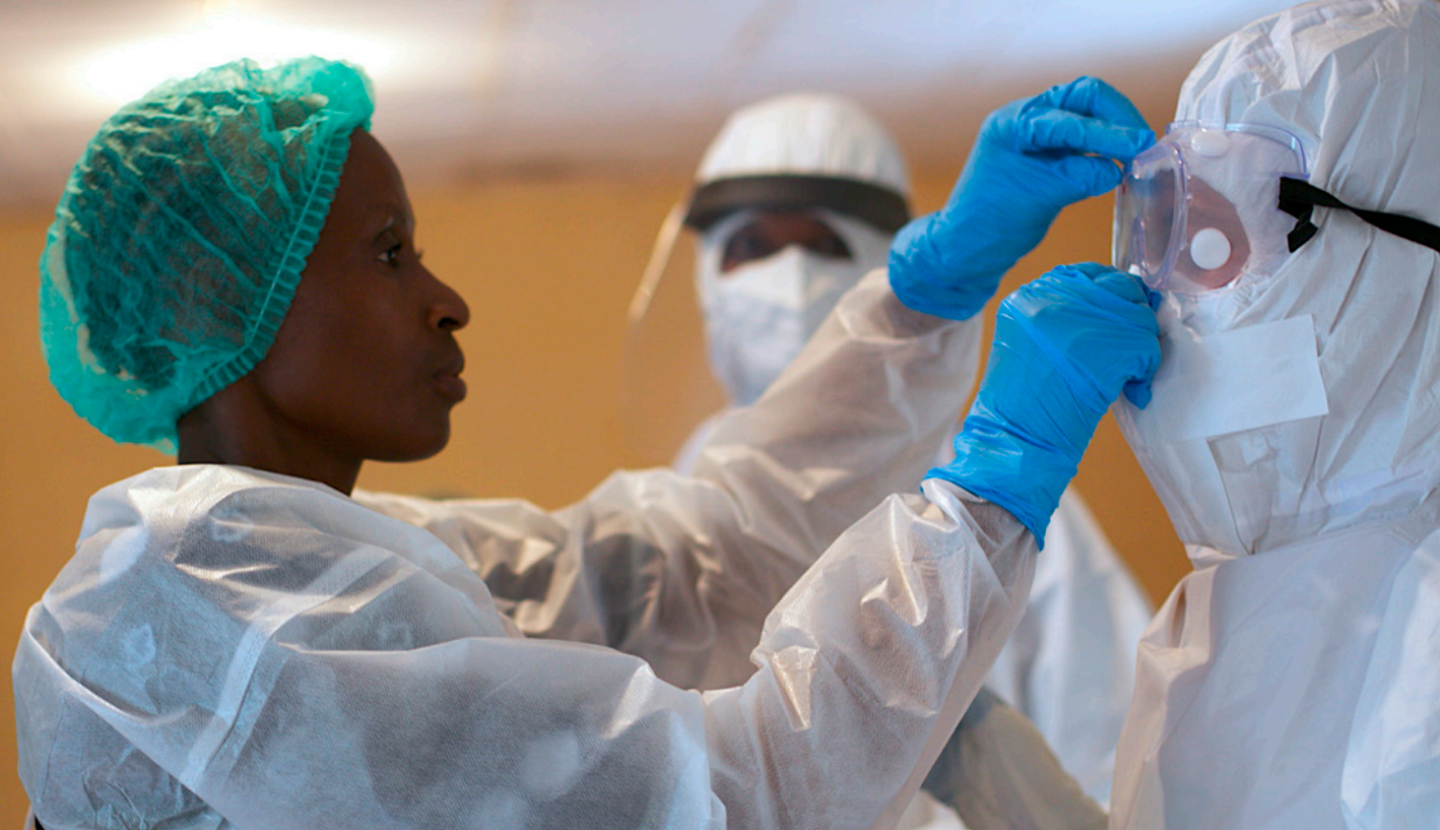
Actually it’s probably a pandemic: a deadly new disease that spreads out of control. We’ve recently seen the risks with Ebola and swine flu, but they pale in comparison to the Spanish flu which killed 3% of the world’s population in 1918 to 1920. If a pandemic of that scale happened again today, 200 million would die.

Looking back further, the Black Death killed 30 to 60% of Europe’s population, which would today be two to four billion globally.

The world is woefully unprepared to deal with new diseases. Many countries have weak or non-existent health services. Diseases can spread worldwide in days due to air travel. And international efforts to limit the spread of new diseases are slow, if they happen at all.

Even more worryingly, scientific advances are making it easier to create diseases much worse than anything nature could throw at us – whether by accident or deliberately.

In this in-depth interview I speak to Howie Lempel, who spent years studying pandemic preparedness for Open Philanthropy. We spend the first 20 minutes covering his work as a foundation grant-maker, then discuss how bad the pandemic problem is, why it’s probably getting worse, and what can be done about it. In the second half of the interview we go through what you personally could study and where you could work to tackle one of the worst threats facing humanity.

Continue reading →

#3 – Dario Amodei on OpenAI and how AI will change the world for good and ill

Just two years ago OpenAI didn’t exist. It’s now among the most elite groups of machine learning researchers. They’re trying to make an AI that’s smarter than humans and have $1b at their disposal.

Even stranger for a Silicon Valley start-up, it’s not a business, but rather a nonprofit founded by Elon Musk and Sam Altman among others, to ensure the benefits of AI are distributed broadly to all of society.

I did a long interview with one of its first machine learning researchers, Dr Dario Amodei, to learn about:

  • OpenAI’s latest plans and research progress.
  • His paper Concrete Problems in AI Safety, which outlines five specific ways machine learning algorithms can act in dangerous ways their designers don’t intend – something OpenAI has to work to avoid.
  • How listeners can best go about pursuing a career in machine learning and AI development themselves.

Continue reading →

#2 – David Spiegelhalter on risk, statistics, and improving the public understanding of science

My colleague Jess Whittlestone and I spoke with Prof David Spiegelhalter, the Winton Professor of the Public Understanding of Risk at the University of Cambridge.

Prof Spiegelhalter tries to help people prioritise and respond to the many hazards we face, like getting cancer or dying in a car crash. To make the vagaries of life more intuitive he has had to invent concepts like the microlife, or a 30-minute change in life expectancy. He’s regularly in the UK media explaining the numbers that appear in the news, trying to assist both ordinary people and politicians to make sensible decisions based in the best evidence available.

We wanted to learn whether he thought a lifetime of work communicating science had actually had much impact on the world, and what advice he might have for people planning their careers today.

Continue reading →

#1 – Miles Brundage on the world’s desperate need for AI strategists and policy experts

If a smarter-than-human AI system were developed, who would decide when it was safe to deploy? How can we discourage organisations from deploying such a technology prematurely to avoid being beaten to the post by a competitor? Should we expect the world’s top militaries to try to use AI systems for strategic advantage – and if so, do we need an international treaty to prevent an arms race?

Questions like this are the domain of AI policy experts.

We recently launched a detailed guide to pursuing careers in AI policy and strategy, put together by Miles Brundage at the University of Oxford’s Future of Humanity Institute.

It complements our article outlining the importance of positively shaping artificial intelligence and a podcast with Dr Dario Amodei of OpenAI on more technical artificial intelligence safety work which builds on this one. If you are considering a career in artificial intelligence safety, they’re all essential reading.

I interviewed Miles to ask remaining questions I had after he finished his career guide. We discuss the main career paths; what to study; where to apply; how to get started; what topics are most in need of research; and what progress has been made in the field so far.

Continue reading →