#224 – Andrew Snyder-Beattie on the low-tech plan to patch humanity’s greatest weakness: engineered biological catastrophes
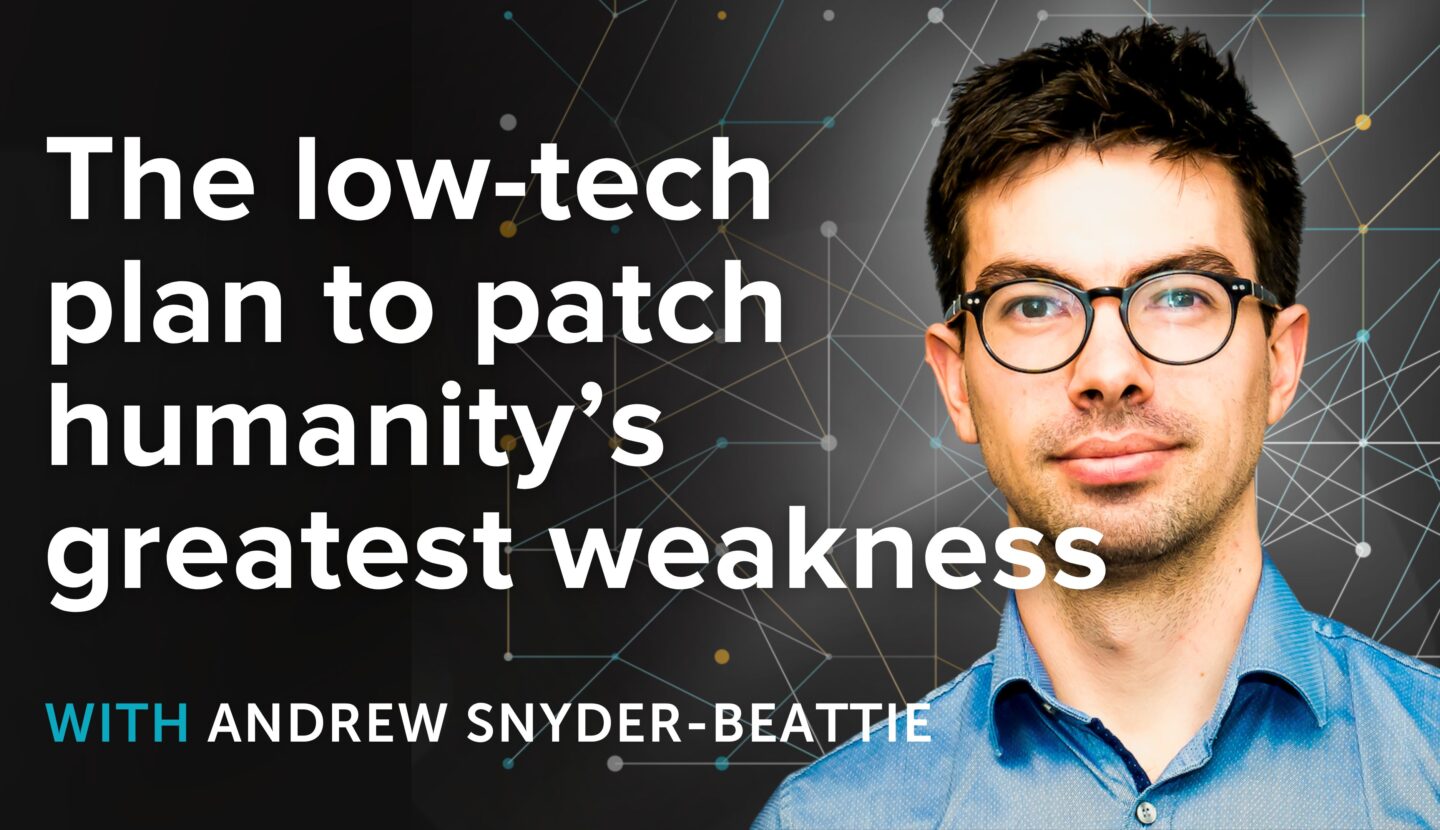
Conventional wisdom is that safeguarding humanity from the worst biological risks — microbes optimised to kill as many as possible — is difficult bordering on impossible, making bioweapons humanity’s single greatest vulnerability. Andrew Snyder-Beattie thinks conventional wisdom could be wrong.
Andrew’s job at Open Philanthropy (now Coefficient Giving) is to spend hundreds of millions of dollars to protect as much of humanity as possible in the worst-case scenarios — those with fatality rates near 100% and the collapse of technological civilisation a live possibility.
As Andrew lays out, there are several ways this could happen, including:
- A national bioweapons programme gone wrong (most notably Russia or North Korea’s)
- AI advances making it easier for terrorists or a rogue AI to release highly engineered pathogens
- Mirror bacteria that can evade the immune systems of not only humans, but many animals and potentially plants as well
Most efforts to combat these extreme biorisks have focused on either prevention or new high-tech countermeasures. But prevention may well fail, and high-tech approaches can’t scale to protect billions when, with no sane person willing to leave their home, we’re just weeks from economic collapse.
So Andrew and his biosecurity research team at Open Philanthropy have been seeking an alternative approach. They’re now proposing a four-stage plan using simple technology that could save most people, and is cheap enough it can be prepared without government support.
Andrew is hiring for a range of roles to make it happen — from manufacturing and logistics experts to global health specialists to policymakers and other ambitious entrepreneurs.