How much do people differ in productivity? What the evidence says.
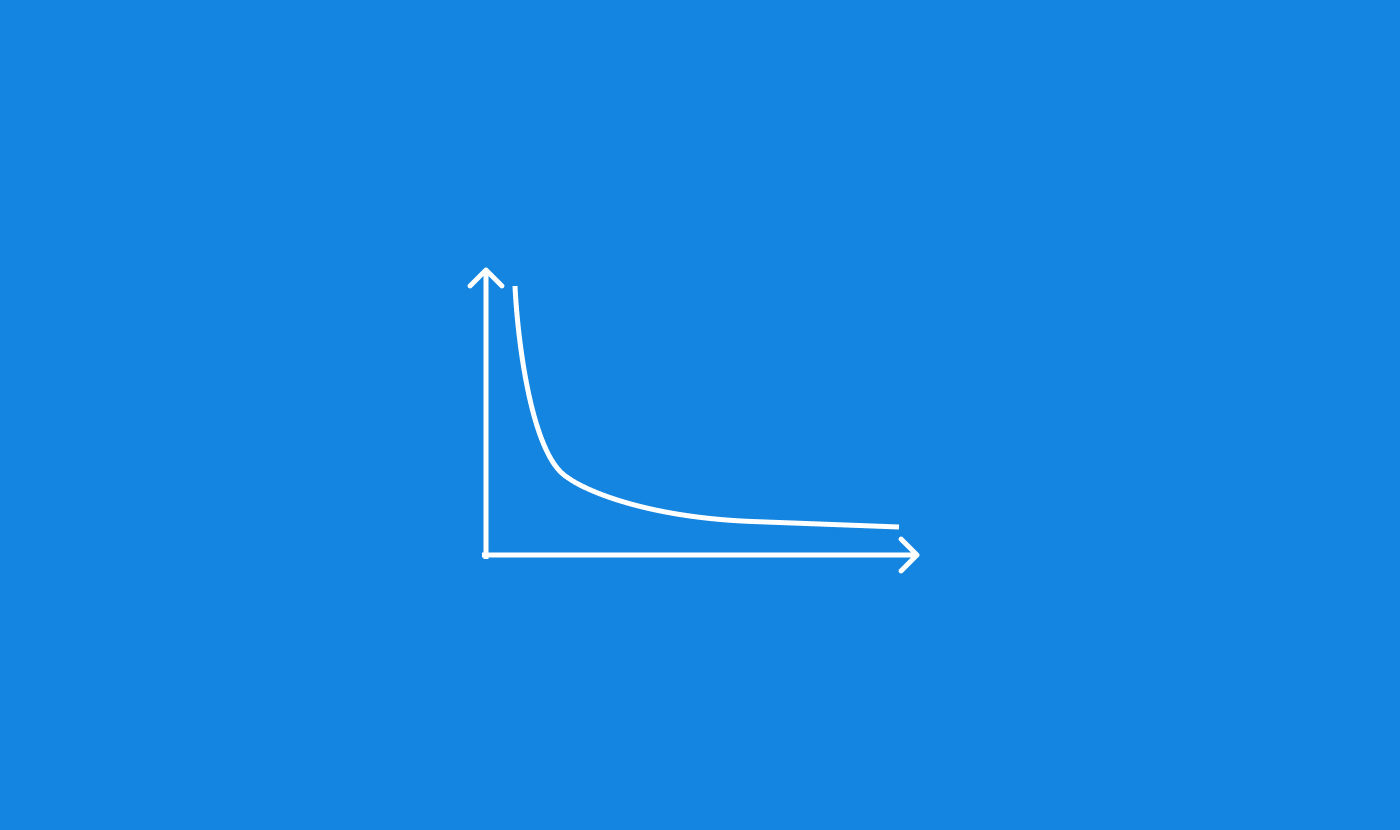
People sometimes point out that performance is ‘power law’ distributed, e.g. they’ll point out that the top 10% of scientists get 5x more citations over their career than the other 90% of scientists, or that the top 1% of startup founders get 80% of the equity value.
But is this true? And if so, what does it imply?
I think these differences in performance can be really important, and their significance is often not properly appreciated. But it’s also often oversold.
To better understand how much people predictively differ in productivity, Max Daniel of Coefficient Giving and I did an informal review of the academic research.
We found there’s relevant research in several fields (often pursued independently) including economics, organisational psychology, expert performance, scientometrics, and physics.
We aimed to get an overview of what’s out there and combine it with our own understanding to see if we could draw any practical lessons for hiring managers or people planning their careers.
Here’s a summary of some of the data we found in the review:
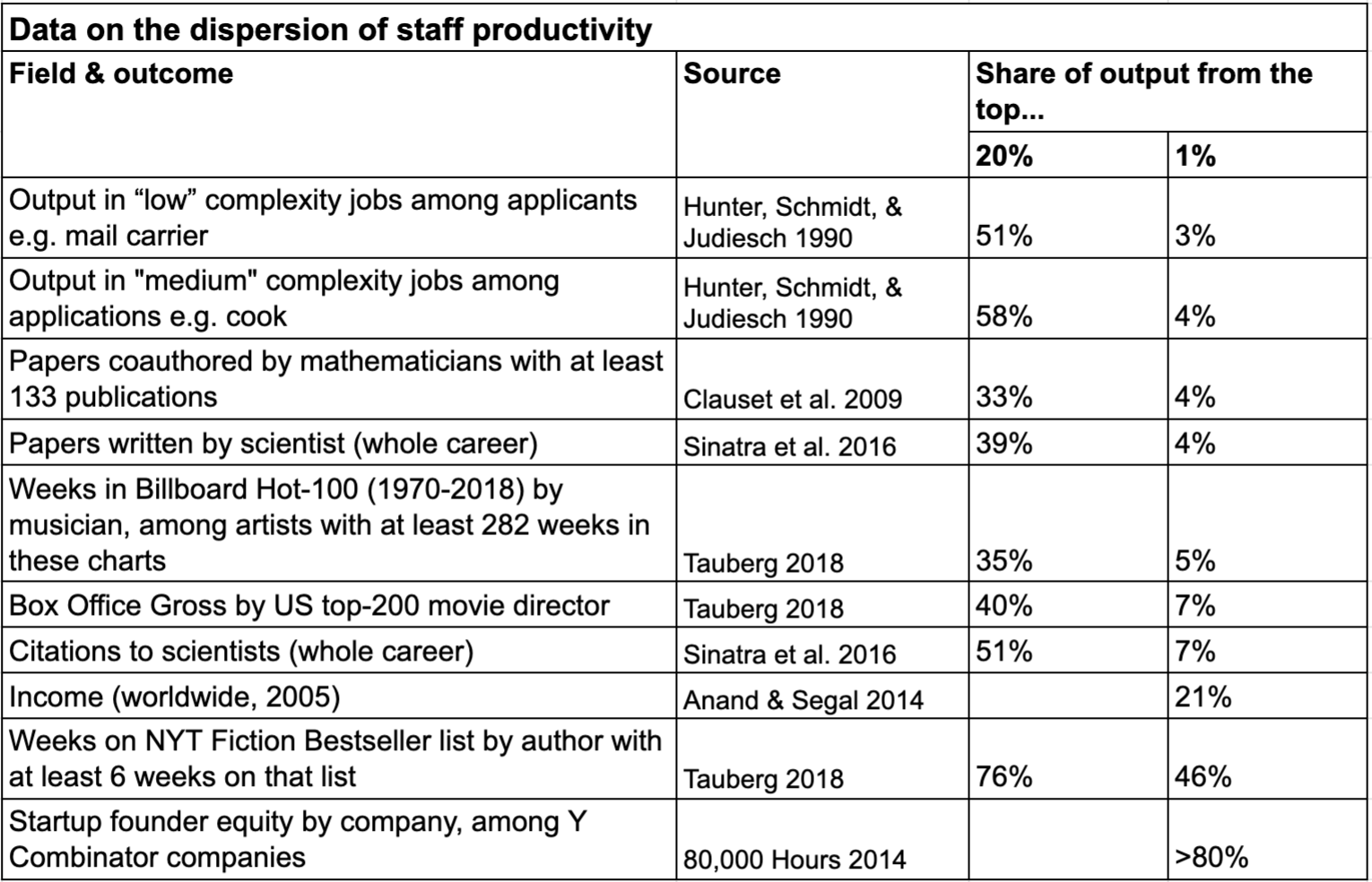
And here’s a 10-point summary of what we learned. (See the full write up here, and discussion on the EA Forum.)
1) ‘Power law’ sounds catchy, but identifying which distribution to use is hard to do, statistically.
Distinguishing power laws from log-normal distributions is notoriously difficult,